Walking Boots, Shoes or Trainers: Which Should You Choose?
Celtic Trails
Loading content...
Celtic Trails
The best footwear for a walking holiday depends on the terrain, the weather and, above all, how comfortably it fits your feet. Walking boots offer more protection on rough ground, walking shoes combine grip with flexibility, and trail trainers provide a lighter alternative.
You don't necessarily need heavy boots for a long-distance walk. Equally, a pair of trainers that feels comfortable on local footpaths may not be suitable for a week of rocky climbs and muddy descents.
The right choice is the pair you can wear comfortably for hours, day after day. Here's what to consider before buying.
There is no single type of footwear that suits every walk. Each has advantages, and much depends on the conditions you expect to encounter.
Walking boots generally have firmer soles, more substantial uppers and greater coverage around the ankle than walking shoes.
They can be a sensible choice for rocky mountain paths, wet grass, muddy trails and uneven ground where you appreciate additional protection beneath and around your feet.
A firmer sole can make walking over sharp stones less tiring, while a higher upper helps protect your ankles from knocks and keeps out some mud and debris.
There are drawbacks. Boots can feel heavier and warmer, particularly in summer, and some take longer to dry once soaked.
Nor does a higher ankle automatically prevent a sprain. Good grip, a secure fit and careful footing still matter.
If your chosen route involves demanding mountain terrain, it is worth getting advice from a specialist outdoor retailer. The British Mountaineering Council's guide to choosing walking boots provides useful additional guidance.
Walking shoes are usually lower-cut and lighter than boots, but have soles designed to cope with outdoor terrain.
For many established long-distance paths, they offer a comfortable balance between grip, protection and flexibility.
They can work well on firm tracks, woodland paths, rolling countryside and routes with a mixture of surfaces. Some have surprisingly substantial soles, so don't assume that a walking shoe is necessarily less capable simply because it doesn't cover your ankle.
The trade-off is less protection around the ankle and, depending on the design, less resistance to water entering from above.
If you prefer lighter footwear but find ordinary trainers inadequate on rough paths, a good walking shoe may be worth trying.
Trail-running trainers have become a familiar sight on long-distance paths, including on the feet of people who have no intention of running.
They are designed for outdoor surfaces, with tread patterns that provide grip on trails rather than pavements.
Many are lightweight, flexible and breathable. Some walkers find them less tiring to wear, particularly in warmer conditions.
They aren't all alike, though. Some are designed for relatively smooth trails, while others have deeper tread and more substantial protection for rough ground.
Trail trainers often dry more quickly than traditional boots, but many offer less protection from cold, wet conditions and sharp stones underfoot.
It is also worth distinguishing trail trainers from ordinary road-running shoes. A comfortable pair of everyday trainers may lack the grip needed on wet grass, loose gravel or muddy slopes.
The important distinction is the ground the footwear is designed for, not whether the manufacturer calls it a shoe or a trainer.
A long-distance walk is rarely difficult simply because it is long. The ground beneath your feet can change considerably throughout the day.
The Pembrokeshire Coast Path, for example, combines grassy paths with rocky sections and repeated climbs and descents. Even in dry weather, the constant changes in gradient can be demanding on your feet.
On the West Highland Way, you encounter a mixture of tracks, rough lochside paths and exposed Highland terrain.
Neither route dictates one particular type of footwear. What matters is choosing something you trust on its rougher sections, rather than judging the entire walk by the easiest ground.
Think about the surfaces you will encounter:
Your own walking experience matters too. Someone accustomed to rocky hills in trail trainers may feel perfectly comfortable in them. Another walker may prefer the firmer feel of boots on the same ground.
A pair of expensive walking boots is of little use if it rubs your heels or squeezes your toes.
Feet vary considerably in shape, and footwear that suits one person may be thoroughly uncomfortable for another. Different manufacturers also use different shapes, so it pays to try several options.
If possible, visit a specialist outdoor shop where you can walk around in the footwear before deciding.
Try shoes or boots later in the day, when your feet may be slightly larger, and wear the socks you intend to use on your holiday.
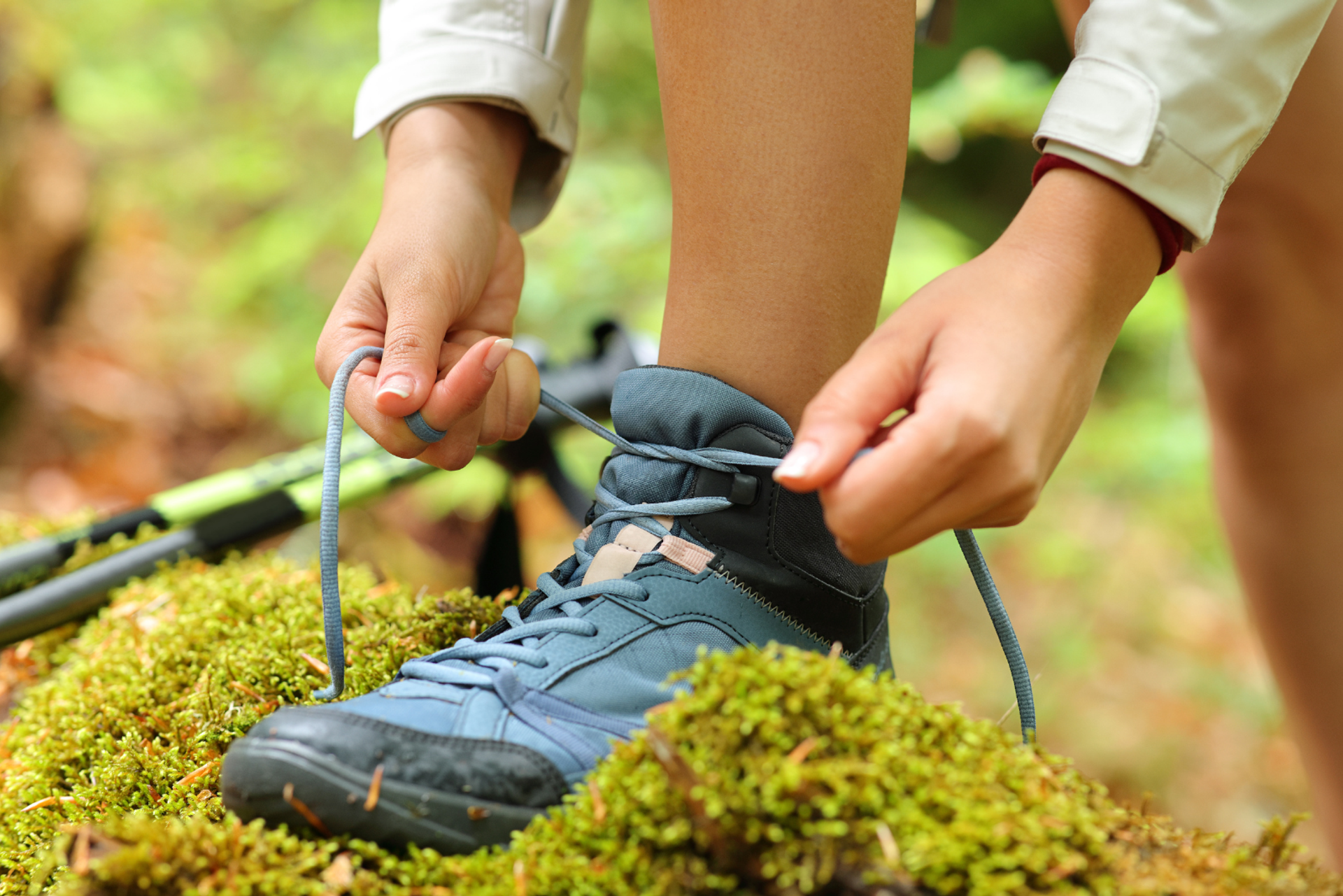
Your heel should feel secure without excessive slipping. There should be enough room around your toes for them to move naturally, without your foot sliding forward inside the shoe.
This becomes particularly important downhill. Footwear that feels fine on level ground can become painful when your toes repeatedly press against the front.
If the shop has a sloping ramp, try walking both uphill and downhill.
Pay attention to pressure around your toes, the sides of your feet and the ankle. Lacing adjustments can help with minor fitting issues, but they cannot make a badly shaped shoe fit properly.
If a particular pair feels uncomfortable in the shop, don't buy it hoping it will eventually become comfortable.
And if you experience persistent foot pain or have an existing foot condition, a podiatrist can advise on your individual needs.
Waterproof footwear sounds like the obvious choice for walking in Britain, but there are trade-offs.
Waterproof boots and shoes can keep your feet more comfortable in wet grass, shallow puddles and prolonged damp conditions. They can be particularly useful in cooler weather.
However, waterproof membranes can make footwear warmer, and a waterproof shoe will not keep your foot dry if water enters over the top.
Once thoroughly soaked inside, waterproof footwear may also take longer to dry.
Non-waterproof trail shoes generally allow more airflow and can dry more quickly. In warm conditions, that may be more comfortable than walking with damp feet inside heavy boots.
Consider the season, the likely weather and how much time you expect to spend on wet ground.
For a warm-weather walk on relatively dry paths, you may value breathability more than waterproofing. For a cool autumn walk across open, wet countryside, keeping water out may be the greater priority.
There is no single answer, and even good waterproof footwear has its limits.
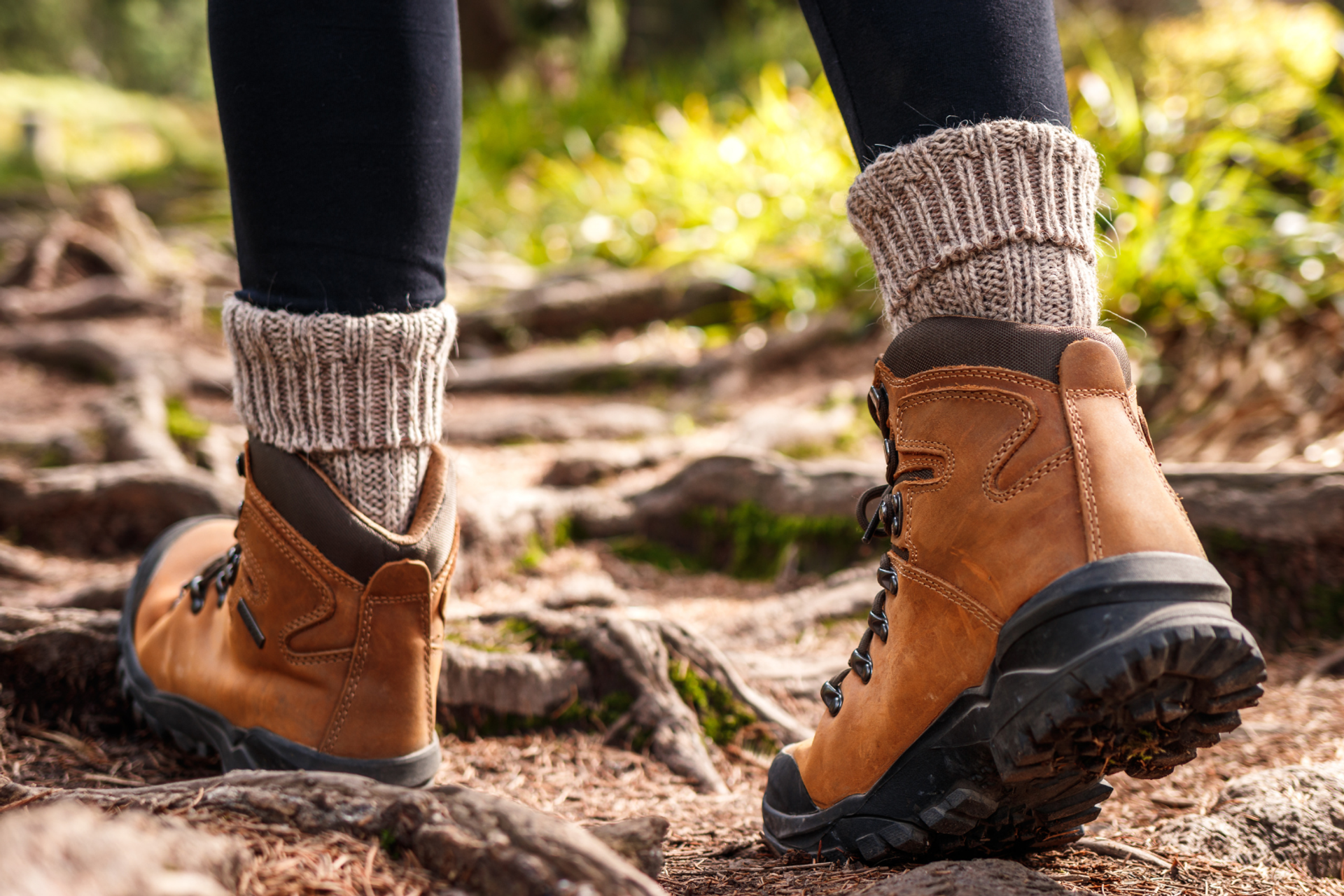
A good pair of walking socks can make as much difference to comfort as the footwear itself.
Ordinary cotton socks tend to retain moisture, which can increase rubbing against the skin. Walking socks made from wool blends or moisture-wicking synthetic fibres are usually a better choice.
Thickness matters too. A sock that works well in roomy boots might make a close-fitting walking shoe uncomfortably tight.
Some walkers prefer double-layer socks, which can help reduce friction. Others find a single, well-fitting pair more comfortable.
Whatever you choose, test your socks with your footwear before travelling.
Carry a spare pair in your daypack, particularly if you're likely to encounter wet conditions.
Blisters often begin with a slight rubbing sensation that is easy to ignore.
If you notice a hot spot on your heel or toe, stop and deal with it before the skin becomes damaged.
Check for grit inside your footwear, smooth out any creased socks and dry your feet if necessary. Protective tape or a suitable blister dressing can help prevent further rubbing.
Don't assume that blisters are an inevitable part of a long-distance walk. Properly fitting footwear, suitable socks and a little attention to your feet can substantially reduce the risk.
The Royal College of Podiatry has further advice on preventing and treating blisters.
Yes, although it is better to think of this as testing your footwear rather than forcing it to become comfortable.
Modern walking shoes and trail trainers often feel comfortable straight away. Firmer walking boots may take more time to soften and adjust.
Neither should cause persistent pain.
Begin with shorter walks, then gradually increase the distance. Include hills and uneven ground similar to what you expect on holiday.
Most importantly, try walking on consecutive days.
Footwear that feels comfortable on a Sunday afternoon may reveal pressure points after several days of repeated walking.
Notice how your feet feel towards the end of each outing. Are your toes uncomfortable on descents? Is one heel beginning to rub? Does the sole feel too thin when walking over stones?
These are useful things to discover at home, rather than halfway through your holiday.
Not necessarily.
If your boots or shoes fit well, remain comfortable and still have sound soles, they may be a better choice than an unfamiliar new pair.
However, inspect them carefully before travelling.
Look for worn tread, damaged stitching, separating soles and areas where the upper has begun to split.
Footwear that has lost its grip or is beginning to fall apart is not worth risking on a long walk, however comfortable it once felt.
And if you do replace it, leave enough time to test the new pair properly.
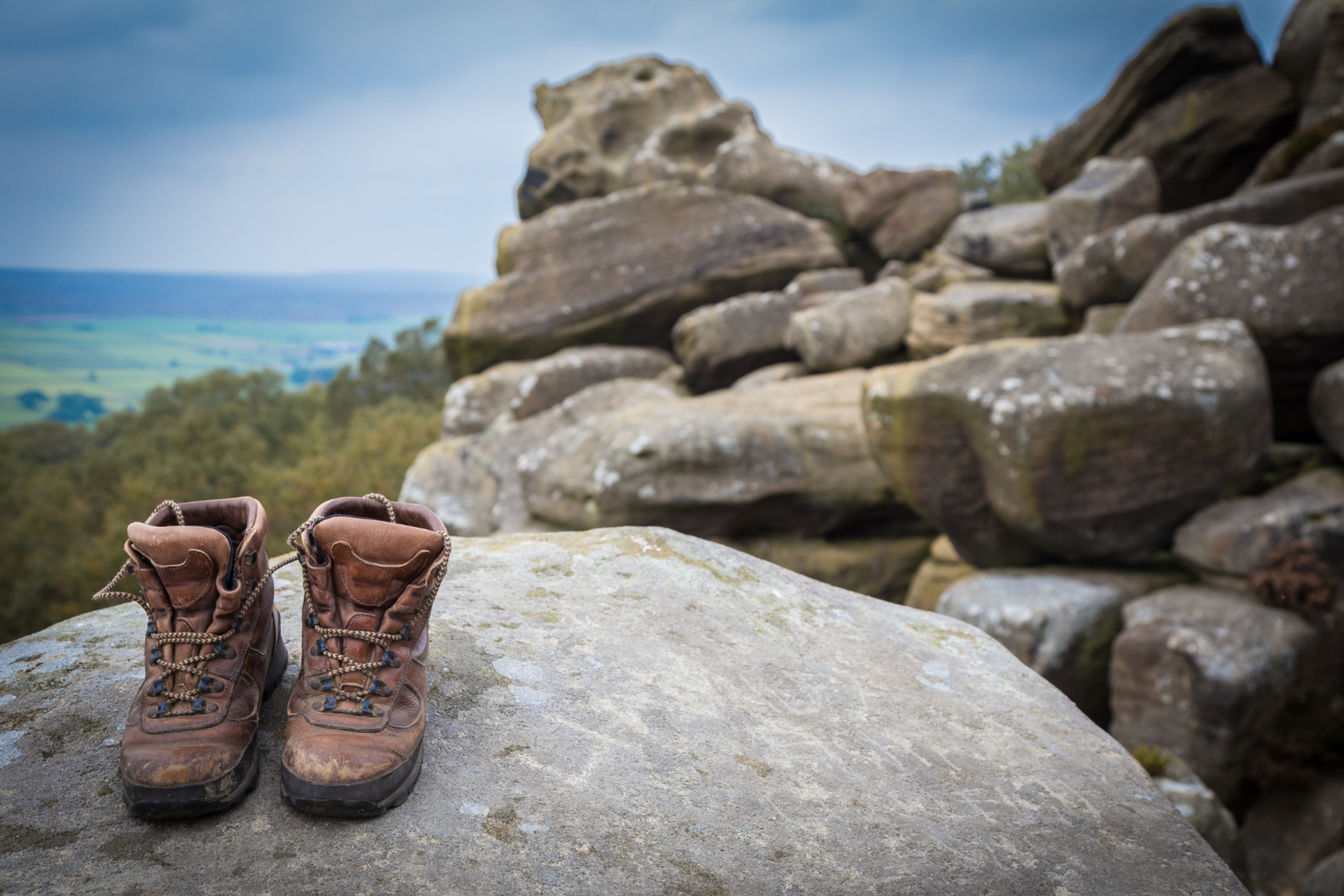
You probably won't need two pairs of boots or trail shoes for an ordinary walking holiday, provided your main pair is suitable and in good condition.
It is worth bringing something comfortable to change into at the end of the day, though.
After hours in walking footwear, your feet will appreciate a break. A lightweight pair of shoes or sandals is useful for evenings at your accommodation.
On a Celtic Trails holiday, your main bag moves ahead to the next stop, so you walk the day with only what you choose to carry.
This means you can keep spare footwear and other belongings in your main bag without carrying them along the trail.
Our walking holiday packing checklist covers the other clothing and equipment worth bringing.
If you regularly walk in boots and find them comfortable, there may be little reason to change.
If you prefer lighter footwear and your route is suitable, walking shoes or trail trainers may serve you just as well.
Choose according to the roughest ground you reasonably expect to encounter, then judge the fit carefully. Remember that a comfortable shoe on a sunny afternoon needs to remain comfortable on a wet morning and towards the end of a long day.
There is no advantage in carrying unnecessary weight on your feet, but neither is there much pleasure in feeling every sharp stone through a sole that offers too little protection.
When you reach your accommodation, take off your footwear and look forward to the next day's walking, you'll know you've made a sensible choice.
If you're planning a multi-day route, explore our self-guided walking holidays. You can compare routes and request a free, no-obligation personalised estimate before making a commitment.
Last updated October 2026