A Very British Safari: The UK’s Best Wildlife Walking Routes Revealed
Christina | Celtic Trails·
Loading content...
Christina | Celtic Trails·
You don’t need to travel far to experience a true wildlife safari. Across the UK, some of the most remarkable wildlife walks are right on our doorstep. From coastal paths alive with seabirds to quiet countryside trails rich in biodiversity, there is an extraordinary amount of life waiting to be discovered on foot.
Our latest analysis of over 1 million iNaturalist wildlife records reveals just how species-rich these routes really are. By mapping observations along some of the UK’s most popular trails, we’ve uncovered where walkers are most likely to encounter diverse wildlife in a single day.
As we look ahead to Spring 2026, travel is shifting. It is less about ticking off landmarks and more about connection, immersion and slowing down. These biodiversity walks offer exactly that, combining fresh air, movement and meaningful nature experiences.
Welcome to your very own British safari.
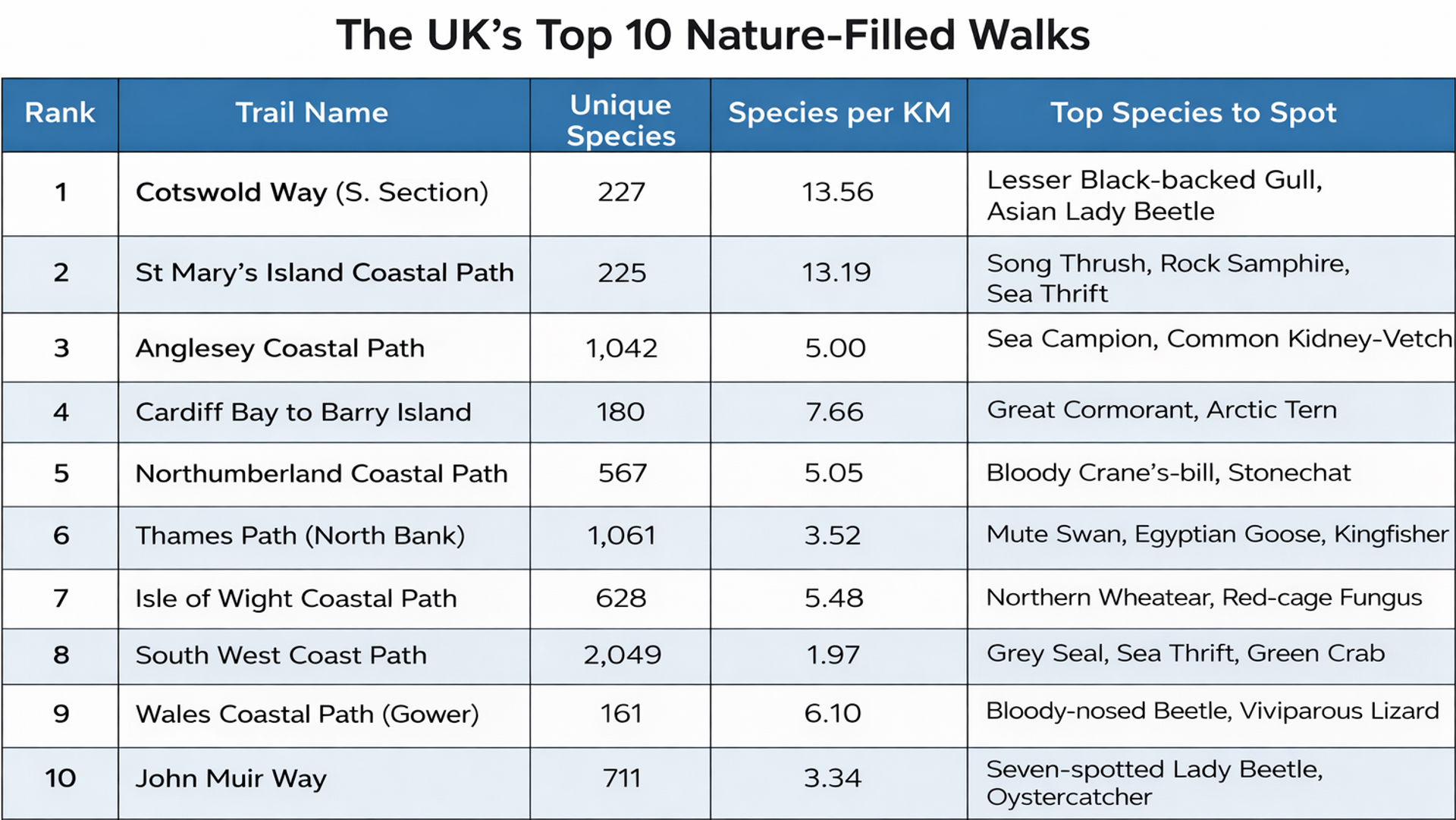
This stretch of the Cotswold Way stands out as the UK’s most species-dense wildlife walk.
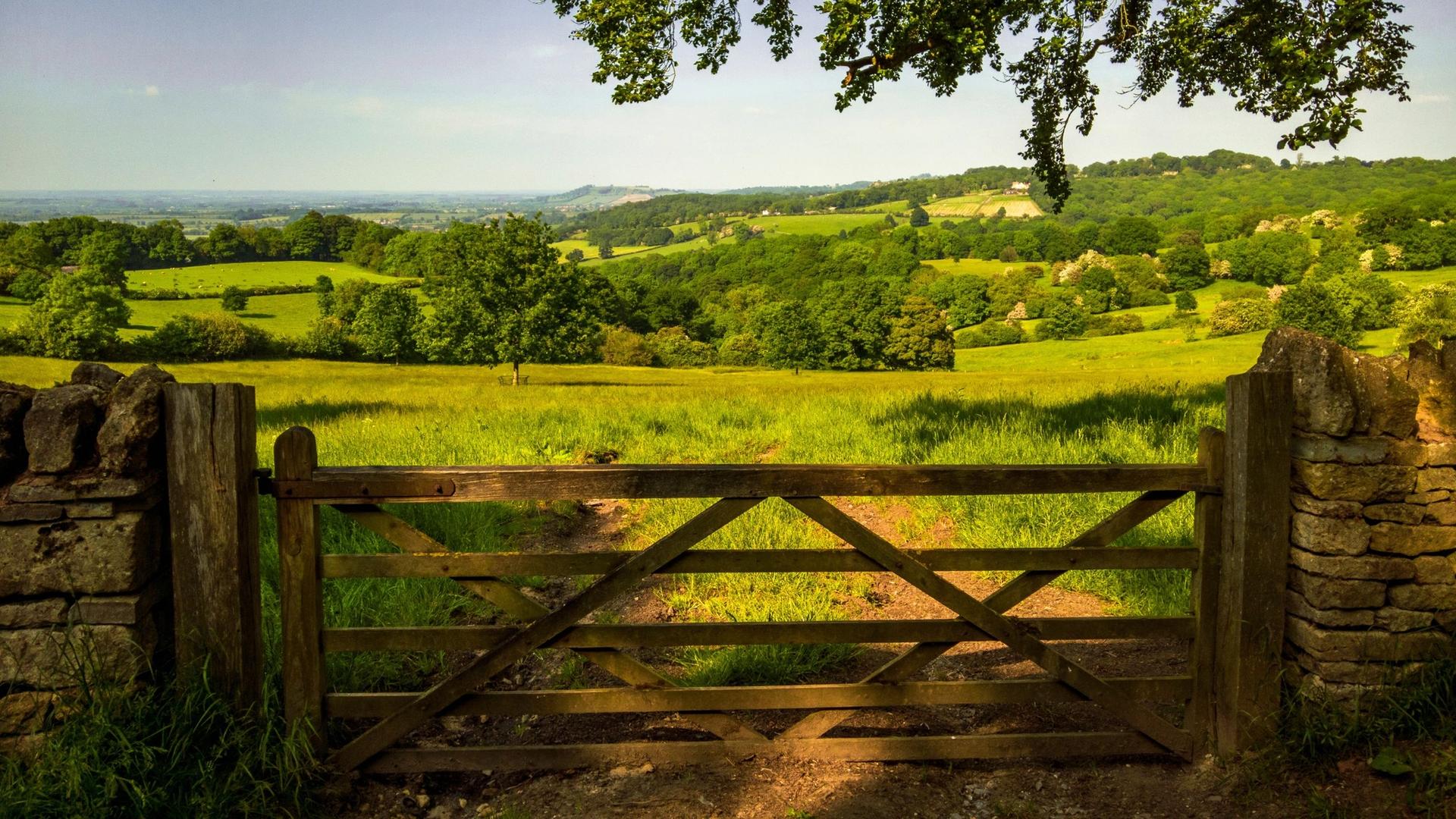
With an impressive 14 species per kilometre, it offers a remarkable concentration of biodiversity in a relatively short distance. Rolling hills, woodland edges and managed farmland create a varied habitat that supports birds, insects and plant life.
Its proximity to Bath and Bristol also makes it ideal for a day trip, proving that high-quality nature spotting in the UK does not require remote travel.
Small but surprisingly powerful, this coastal route delivers one of the highest biodiversity scores in the study.
Its accessibility makes it particularly appealing for families and casual walkers. Despite its shorter length, it consistently records a wide variety of coastal species.
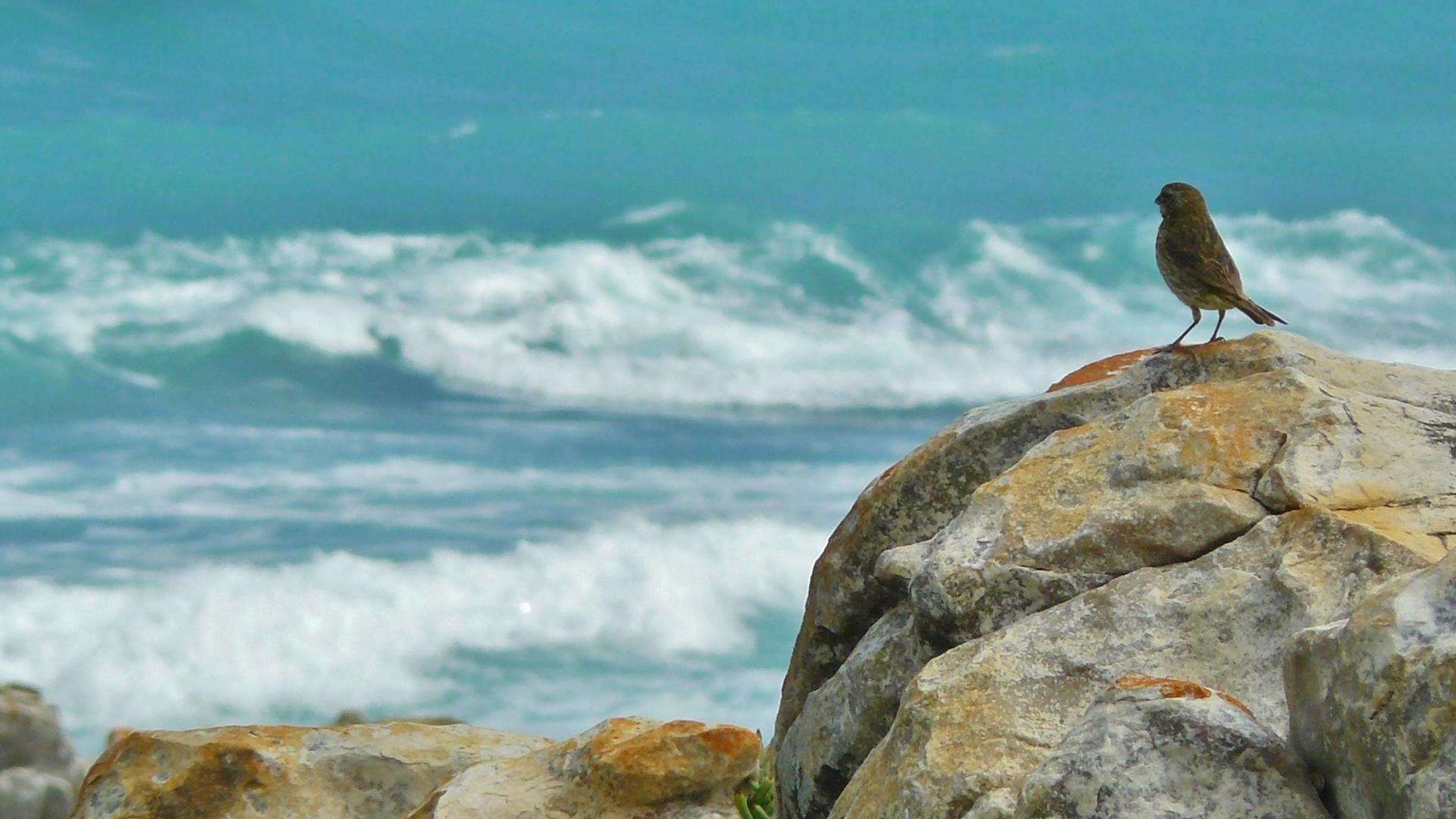
Seabirds, marine life and coastal plants thrive here, making it one of the most rewarding short wildlife walks in the UK.
If variety is your priority, the Anglesey Coastal Path is hard to beat.
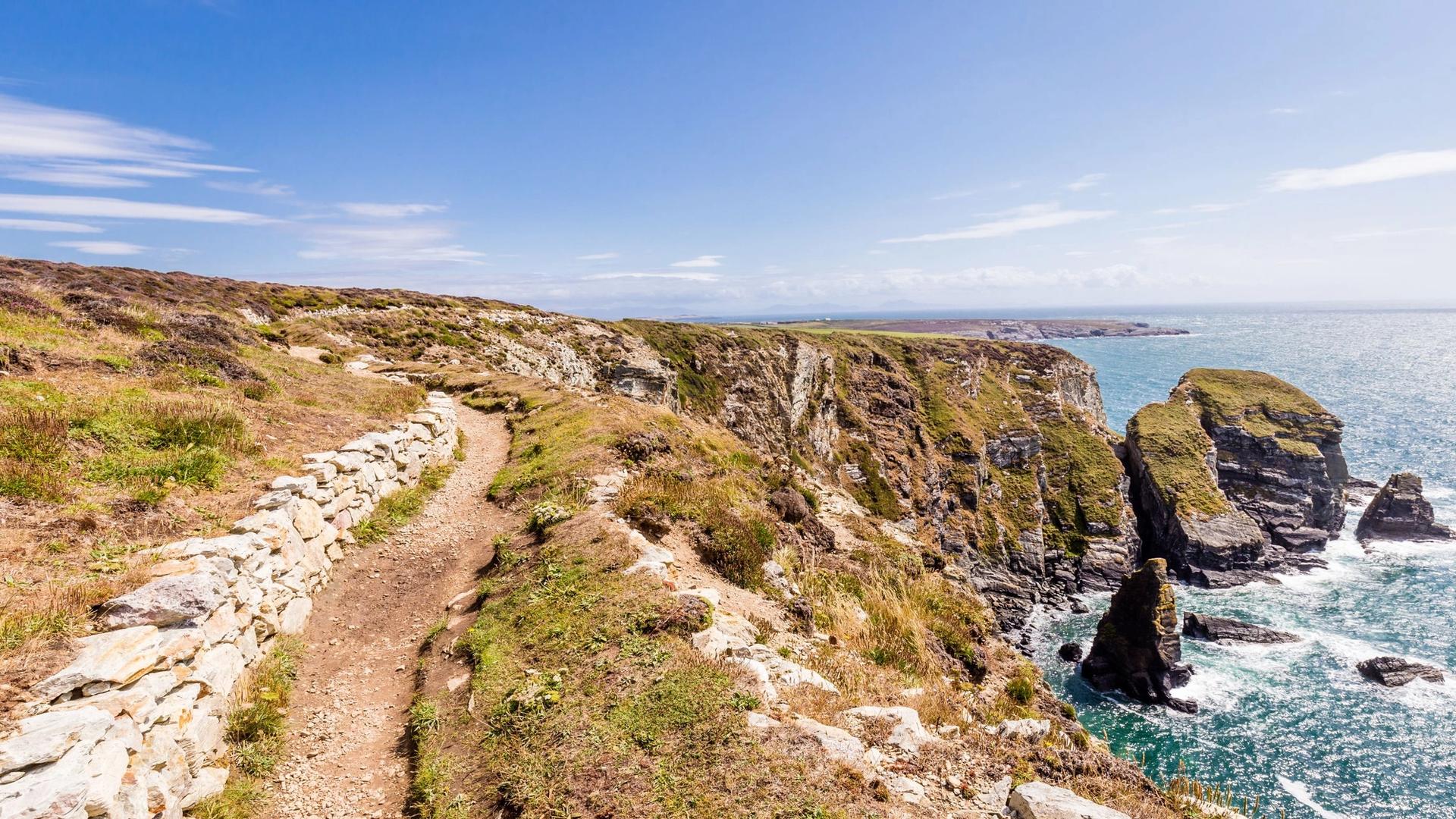
With over 1,000 recorded species, it is one of the richest biodiversity walks in the UK. The rugged Welsh coastline provides a mix of cliffs, beaches and grasslands, creating ideal conditions for a wide range of wildlife.
This route captures the feeling of a true British safari, with dramatic scenery and constant opportunities for nature spotting.
The South West Coast Path leads the way with over 2,000 recorded species. If you want to experience the widest possible range of wildlife, this is one of the best wildlife walks in the UK.
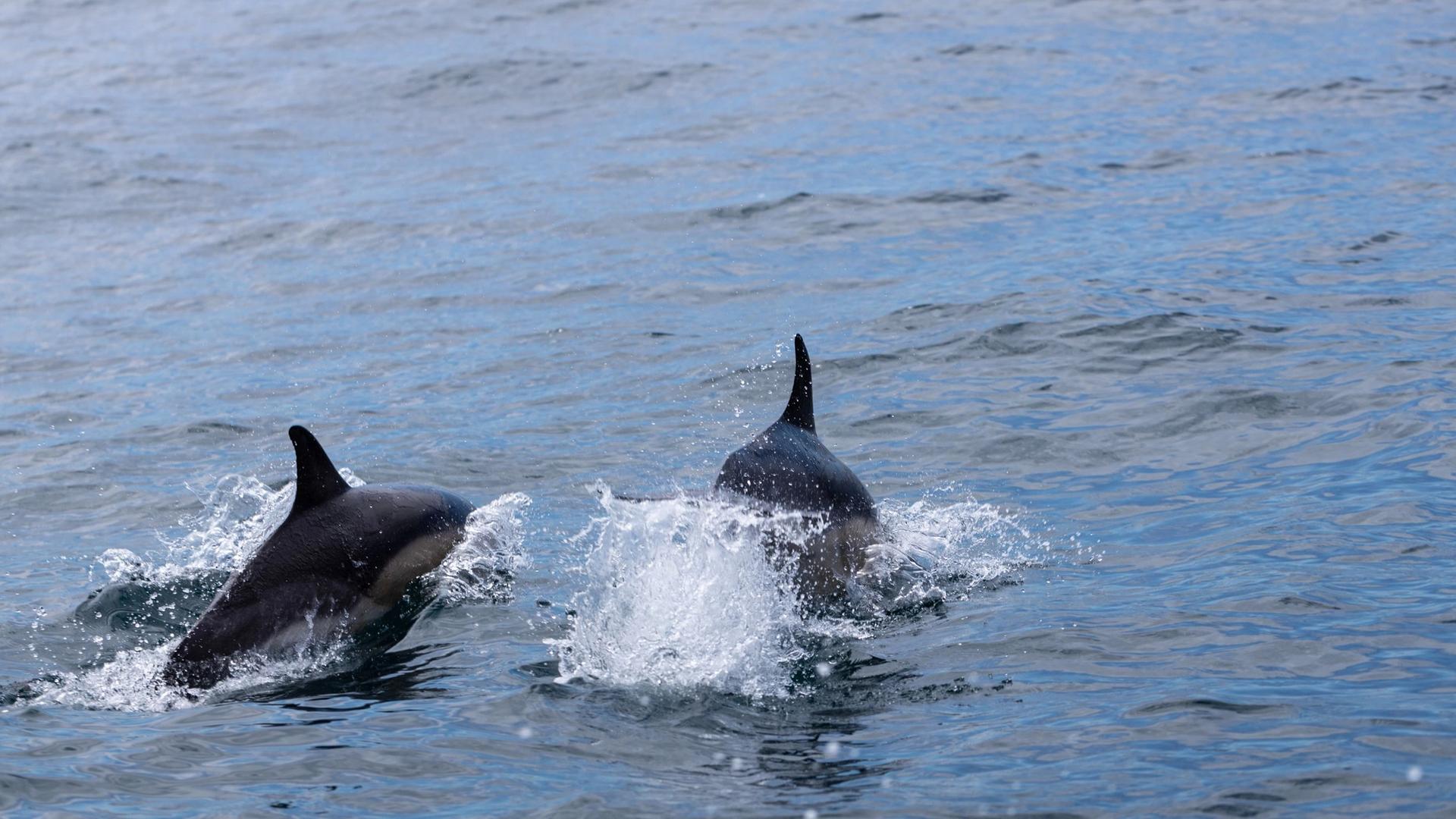
The Cotswold Way offers the highest species density, making it ideal for those who want a rewarding biodiversity walk without covering long distances.
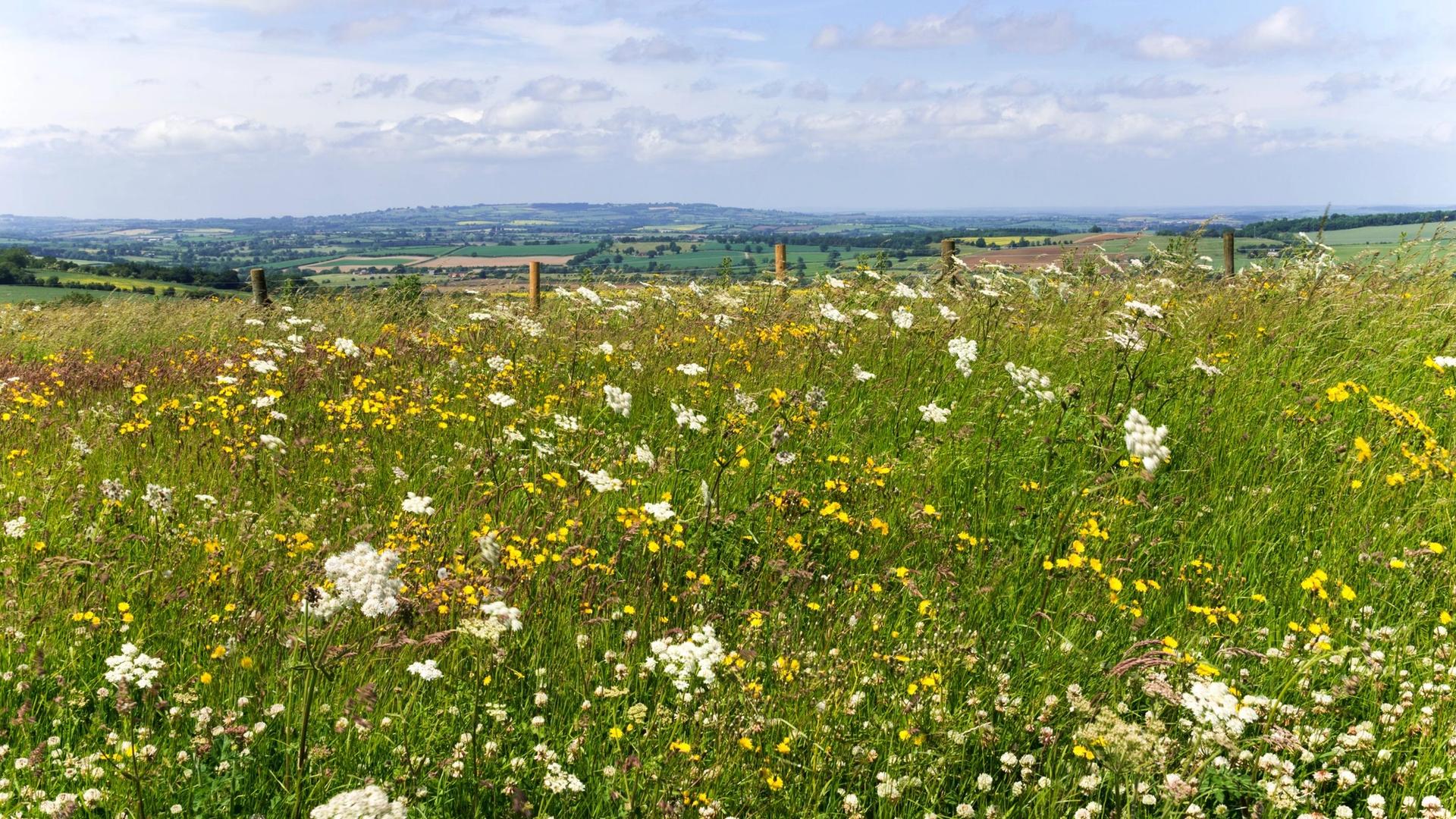
The Thames Path (North Bank) challenges the idea that wildlife belongs only in rural areas.
River corridors act as natural wildlife highways, supporting species such as kingfishers, swans and geese right in the heart of London. It is one of the most accessible wildlife walks for urban explorers.
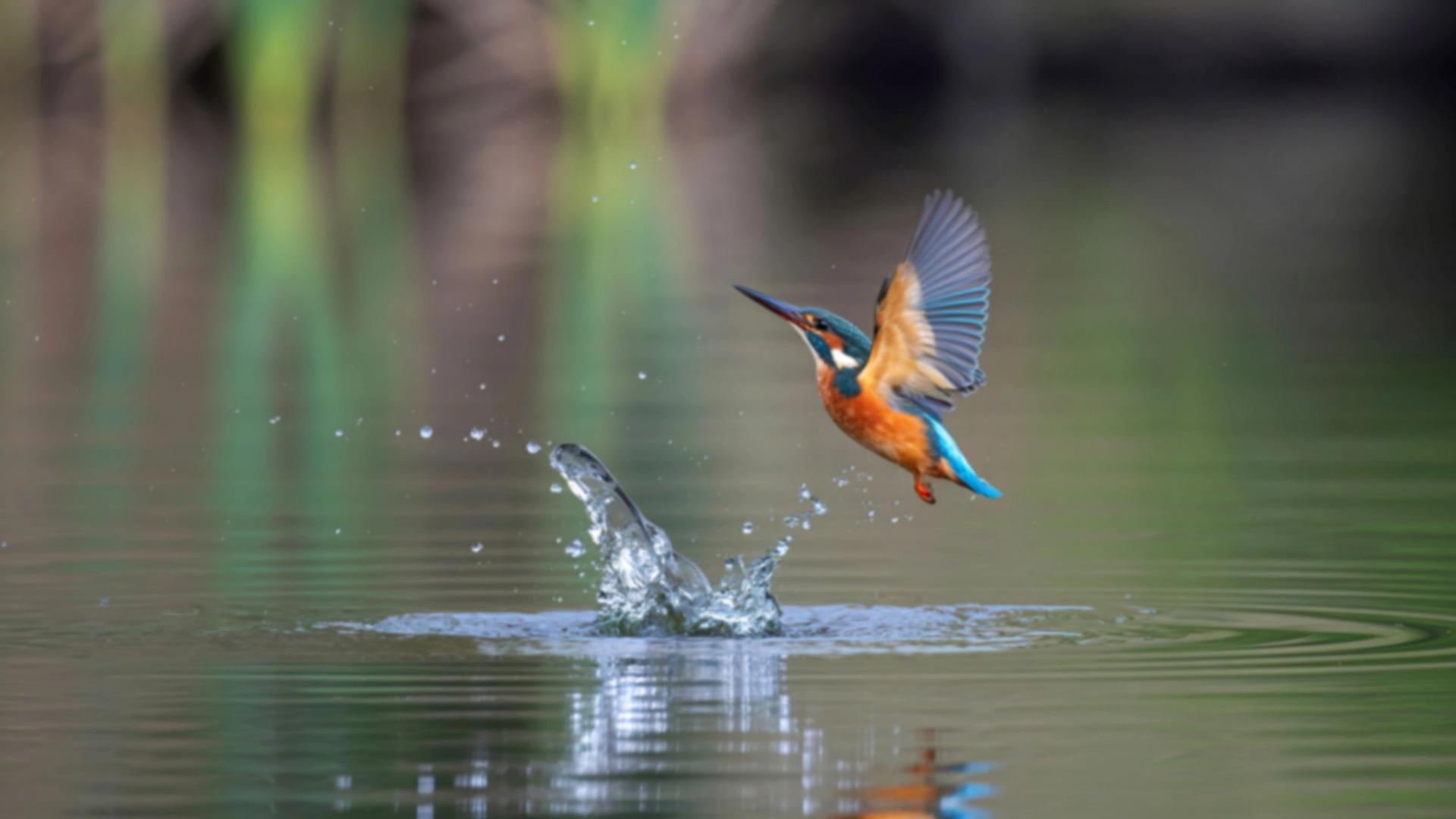
The Northumberland Coastal Path combines high species variety with fewer crowds.
This quieter route offers a more peaceful wildlife experience, with regular sightings of seals, seabirds and coastal flora.
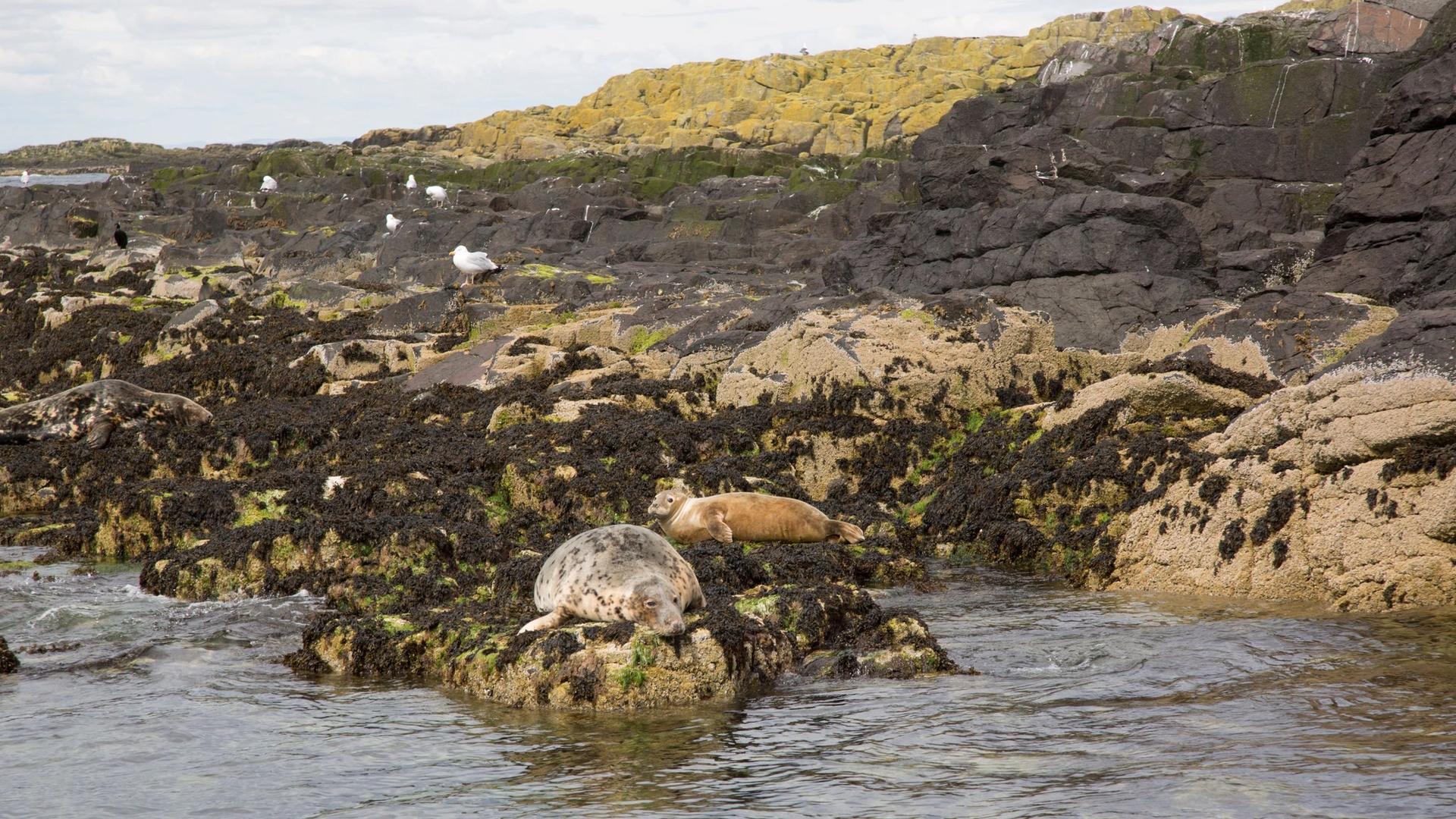
Different landscapes support different species. Knowing what to look for can make your wildlife walks even more rewarding.
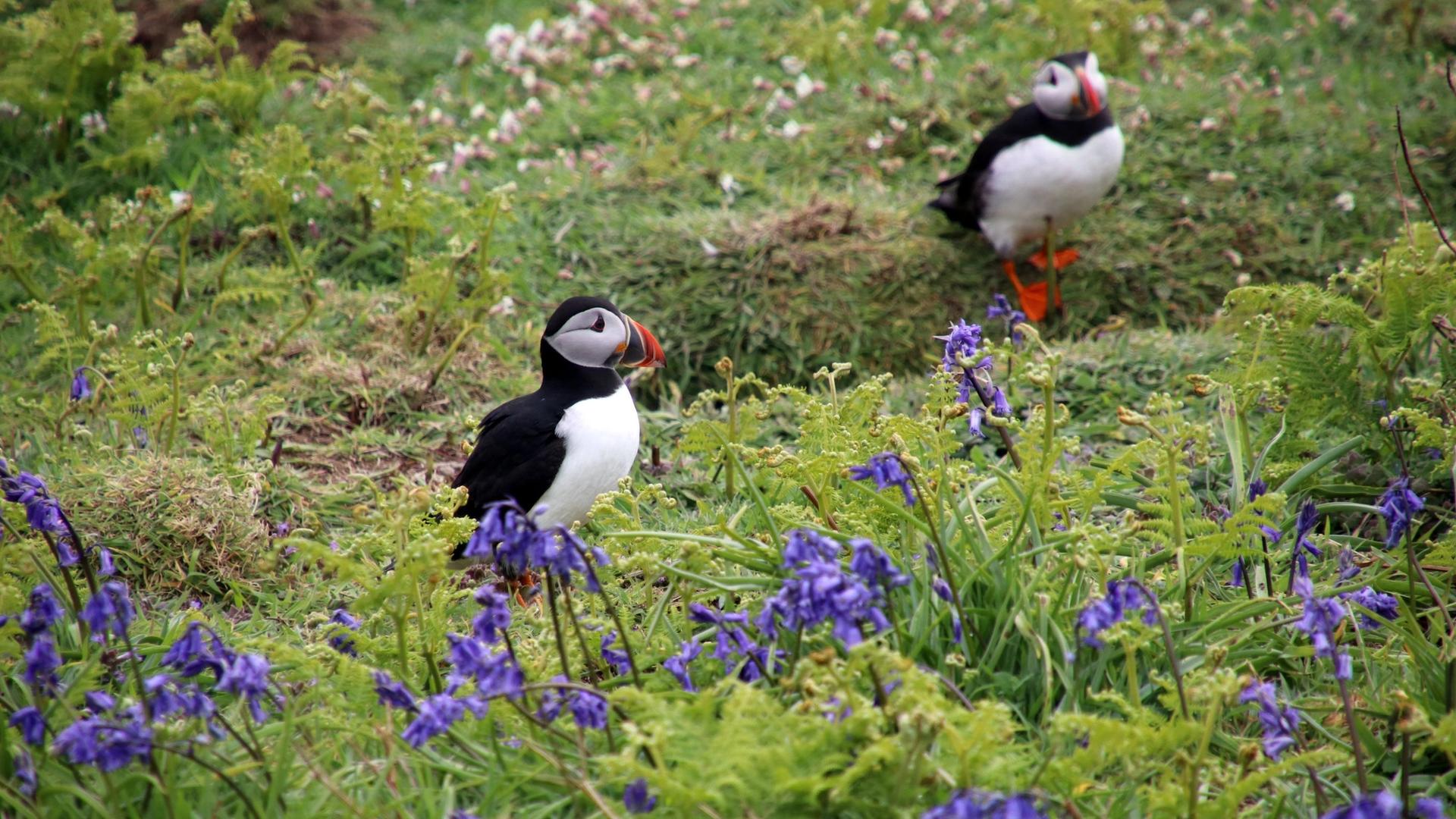
Look out for grey seals resting on beaches, Arctic terns diving for fish and hardy coastal plants such as rock samphire and sea thrift.
In areas like the Cotswolds, expect to see red kites circling overhead, insects thriving in hedgerows and rare wildflowers in sheltered valleys.
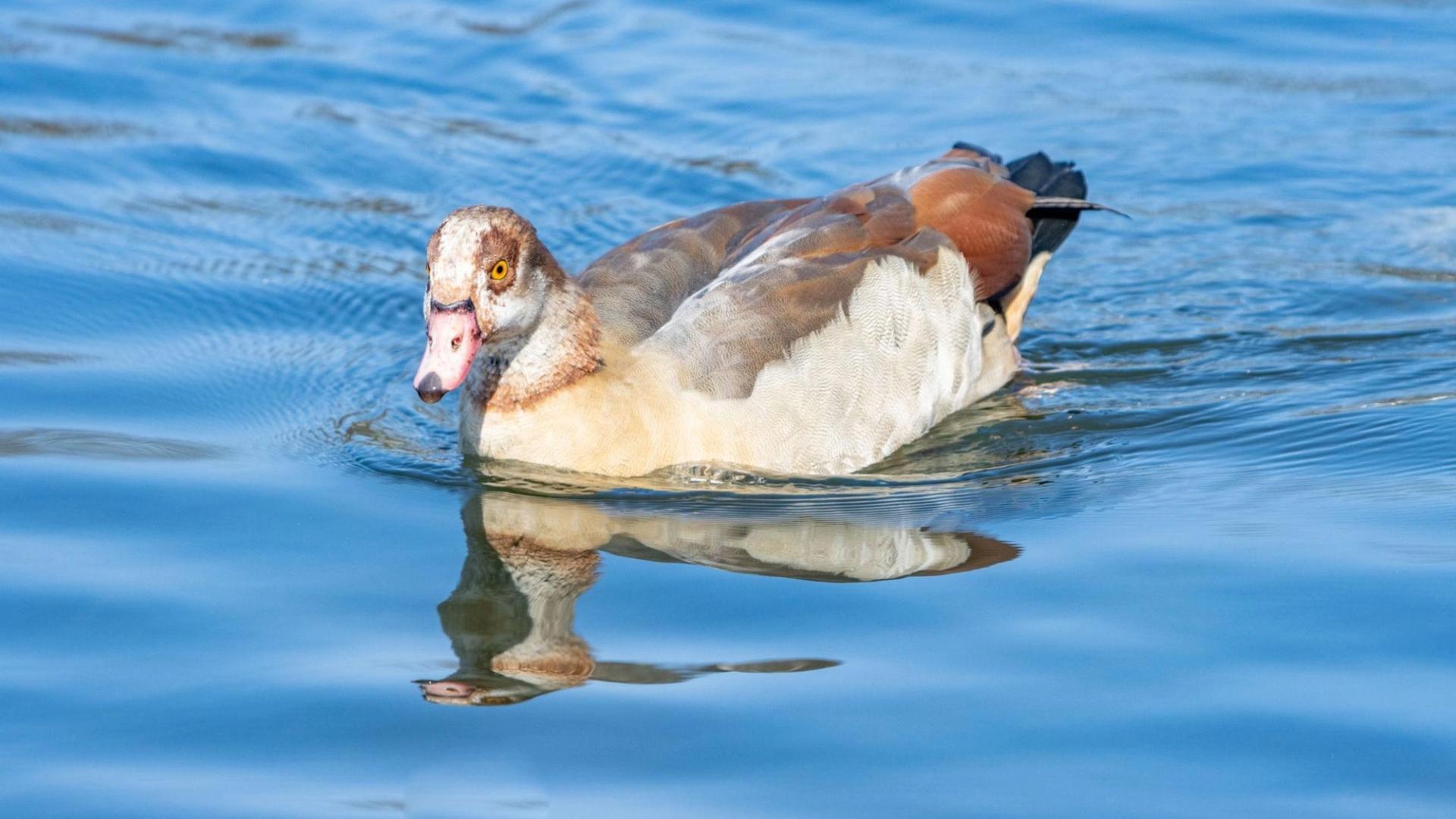
Even in cities, wildlife is never far away. Rivers attract species such as kingfishers, mute swans, Egyptian geese and oystercatchers.
This study analysed walking routes from Celtic Trails alongside over one million wildlife observations recorded on iNaturalist.

To keep the results relevant for walkers, only sightings within a 100 metre buffer of each trail were included. This ensures that the species listed are genuinely observable during a walk.
In total, 47,406 species-level observations were used to calculate a Biodiversity Score. This score combines total species variety, the balance of ecosystems and the density of life per kilometre.
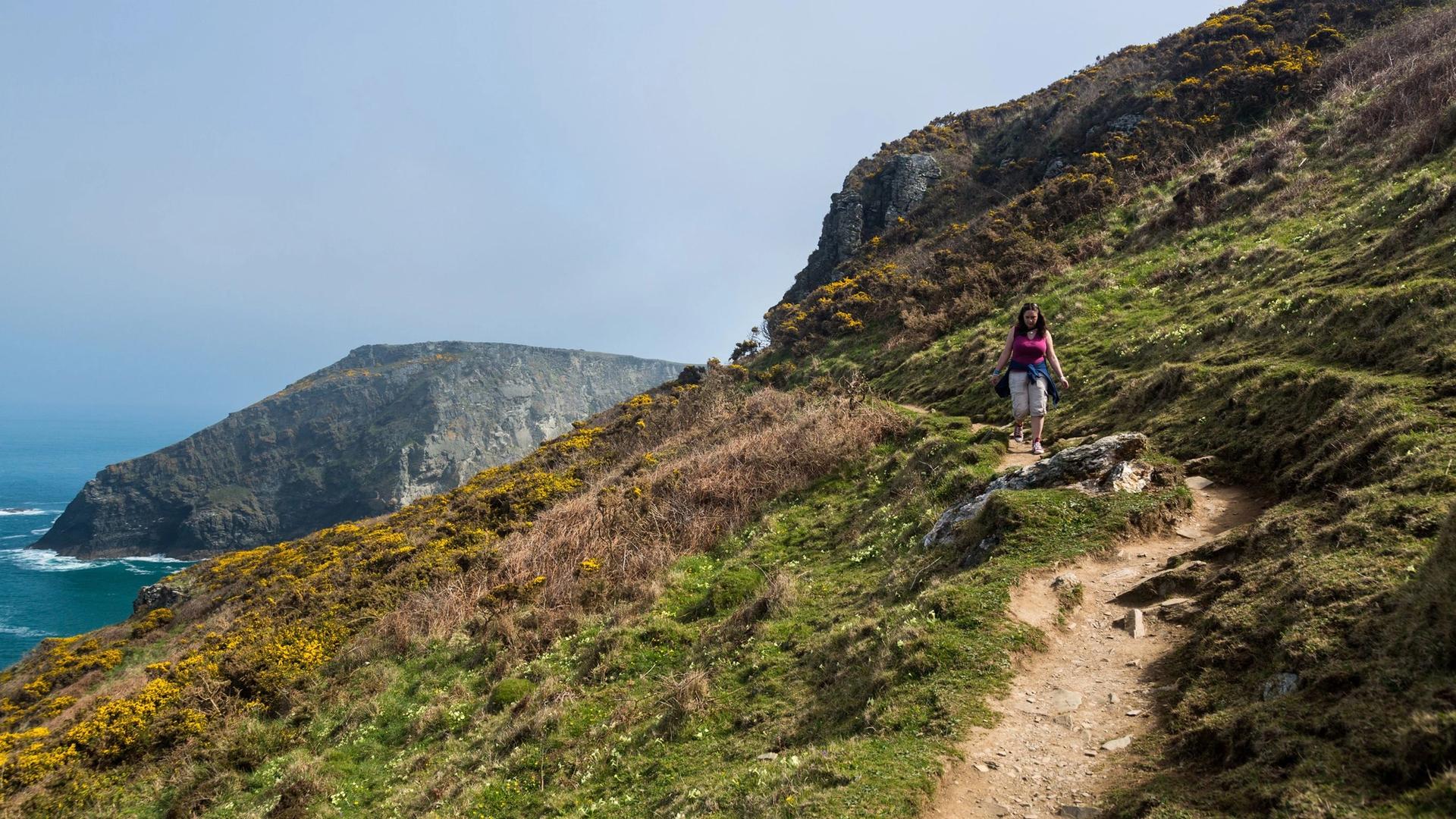
The UK is home to an incredible range of wildlife, often found in places we pass by every day.
Whether you are planning a short countryside walk or a longer coastal journey, these wildlife walks offer the chance to reconnect with nature in a meaningful way.
If you are ready to experience your own British safari, explore our self-guided walking holidays and discover routes designed to bring you closer to the landscapes and wildlife that make the UK so special.
Some of the best wildlife walks in the UK include the Cotswold Way, Anglesey Coastal Path, and the South West Coast Path. These routes stand out for their high biodiversity, with a wide range of birds, plants and coastal species visible on the trail.
Shorter routes like St Mary’s Island Coastal Path also offer excellent nature spotting, especially for families or those looking for accessible walks.
Spring and early summer are the best times for wildlife walks in the UK.
During this period, migratory birds return, wildflowers bloom, and animal activity increases. This makes it easier to spot a greater variety of species in a single walk.
Autumn can also be rewarding, particularly for birdwatching along coastal and wetland routes.
For a successful wildlife walk, it’s worth packing a few essentials:
Travelling light is key, but being prepared helps you make the most of your nature spotting experience.