Common Hiking Mistakes: Blisters & Walking Injuries
Carys
Loading content...
Carys
The most common hiking mistakes often seem harmless at first. A pair of boots that rub slightly, setting off too quickly or ignoring a small ache can make a long walk considerably harder than it needs to be.
Most of these problems are avoidable. A little preparation helps, but so does knowing when to stop, adjust your boots or change your pace.
On a multi-day walking holiday, the small things matter. You want to arrive at the end of the day pleasantly tired, with enough energy and enthusiasm to enjoy the next morning.
Here are some of the mistakes worth avoiding, particularly when it comes to preventing blisters and walking injuries.
A ten-mile walk along a level riverside path is very different from ten miles of repeated climbs and descents.
It is easy to concentrate on daily mileage when choosing a route, but terrain, elevation and the condition of the path all affect how demanding a walk feels.
Coastal paths can be particularly deceptive. You may never climb a great height, yet the constant descent into coves and ascent back to the clifftops can be tiring. Rocky ground also requires more concentration and effort than a smooth track.
Before choosing a long-distance walk, consider the terrain as carefully as the mileage. Think about how you feel after a full day on your feet, and whether you would be comfortable repeating that effort the following morning.
Our guide to how fit you need to be for a walking holiday explains what to consider when choosing a suitable route.
One long practice walk is useful, but it does not necessarily prepare you for several days of walking in succession.
You might finish a Saturday walk feeling reasonably fresh, only to find your calves stiff and your feet tender on Sunday morning. It is that accumulated effort which catches people out on longer holidays.
Build up your walking gradually before travelling. Include hills if your chosen route is hilly, and spend time on uneven ground rather than relying entirely on pavements.
It is also worth practising on consecutive days. This gives you a better idea of how your body responds to repeated walking and how much recovery you need.
If you have been relatively inactive, begin gently rather than trying to make up for lost time shortly before departure.
There is a reason experienced walkers become attached to a particular pair of boots or shoes. They know how their feet feel in them after a full day.
New footwear can feel comfortable in a shop yet rub after several hours, especially once your feet are warm or the path becomes steep.
Wear your walking shoes or boots on several outings before your holiday, gradually increasing the distance. Use the same socks you intend to wear on the trail.
Pay attention to the fit. Your heel should not slip excessively, and your toes need enough room, particularly when descending. If something consistently rubs during a short walk, it is unlikely to improve on a longer one.
There is no single type of footwear that suits every walker or every trail. Comfortable, properly fitting shoes with suitable grip matter more than choosing the heaviest boots available. If you're unsure which footwear is right for you, our guide to choosing the best walking shoes and trainers explains what to consider before buying.
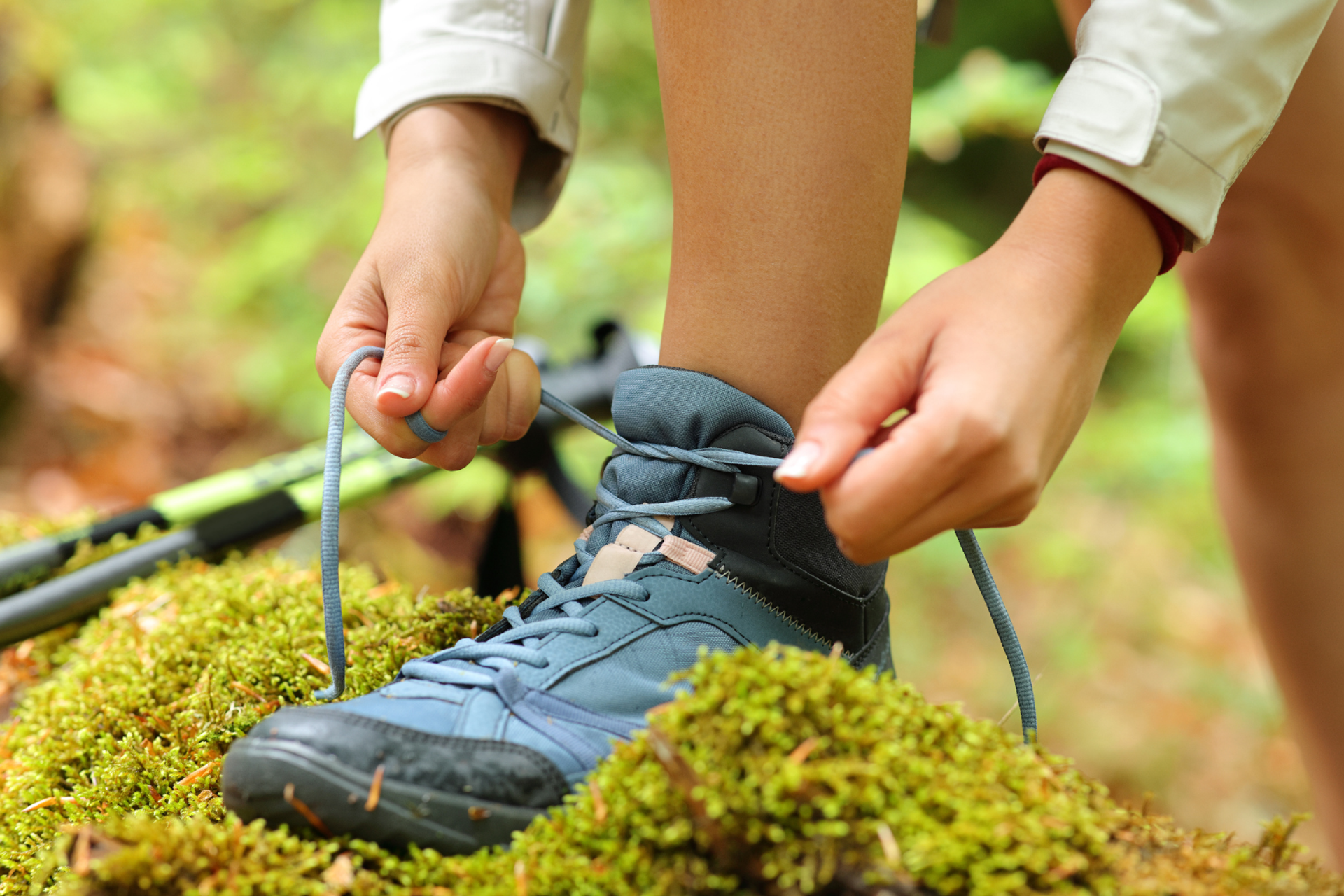
Blisters are one of the most frustrating walking problems, partly because they can develop from something so small.
A slight rubbing sensation at the back of your heel may be easy to ignore when you are enjoying the scenery. By lunchtime, that same spot can be painful with every step.
Friction blisters form when repeated rubbing damages the layers of skin. Moisture, poorly fitting footwear and socks that bunch or slip can all contribute.
Start with comfortable, well-fitting footwear and walking socks that keep moisture away from your skin. Some people find double-layer socks particularly helpful.
Keep your toenails trimmed, remove grit from your shoes and change into dry socks if your feet become wet.
Most importantly, deal with a hot spot as soon as you notice it.
If your heel, toe or the ball of your foot begins to rub, stop somewhere safe and take off your footwear. Check for creased socks or trapped grit, dry your foot if necessary and apply suitable protective tape or padding before continuing.
A few minutes spent dealing with friction can spare you a much more uncomfortable afternoon.
If a blister has formed, protect it from further rubbing with an appropriate blister dressing. Avoid bursting it, as the skin covering it helps protect against infection.
If it has already burst, gently clean the area and cover it with a sterile dressing. Avoid further friction while it heals.
Seek medical advice if the area becomes increasingly red, hot, swollen or painful, or shows other signs of infection.
The Royal College of Podiatry's advice on blisters offers further guidance on prevention and treatment.
It is worth carrying a small foot-care kit containing blister dressings, protective tape and spare socks. You may never need it, but you will appreciate having it if you do.
There is a difference between the general tiredness of a long day and pain that suggests something is wrong.
Tired legs are to be expected, particularly on a hilly route. Sharp pain, increasing discomfort in a particular joint, swelling or a developing limp deserve more attention.
Walking injuries can develop gradually. Repeated strain on the feet, ankles, knees and tendons may become more troublesome if you continue without allowing time to recover.
One mistake is assuming that any discomfort can simply be walked off.
If pain develops, stop and assess it rather than automatically carrying on. Rest may help with ordinary fatigue, but persistent or worsening pain should not be ignored.
If you have recurring knee, ankle or foot problems, consider speaking to a physiotherapist or appropriate healthcare professional before undertaking a demanding multi-day route.
For a suspected sprain or strain, follow NHS guidance. Seek urgent advice if you cannot bear weight, have substantial swelling or worsening pain. A suspected serious injury needs emergency assessment.
There is no benefit in turning a manageable problem into an injury that prevents you from completing your walk.
Climbing a steep hill may leave you short of breath, but a long descent can be equally demanding on your legs.
Downhill walking places repeated demands on your knees and thighs. Loose stones, wet grass and uneven steps also increase the risk of slipping or twisting an ankle.
Take shorter, controlled steps rather than rushing downhill. Give yourself time to find secure footing, particularly where the path is rocky or slippery.
Walking poles can be helpful on longer descents, providing additional balance and allowing you to share some of the effort with your arms. They take practice, though, so try them before your holiday rather than using them for the first time on a difficult section.
And remember that tiredness changes how you walk. A descent late in the afternoon may require more care than the same ground would have done in the morning.
It is surprisingly easy to walk through a planned break because you feel comfortable and want to keep going.
The difficulty sometimes comes later, when your energy drops and the remaining miles begin to feel much longer.
Eat a proper breakfast, carry food you enjoy and take opportunities to refuel before you become unusually tired or hungry.
You do not need specialist hiking food. A sandwich, fruit, oatcakes or a flapjack can be just as useful.
Water needs vary with the weather, terrain and distance between reliable refill points. Check where you can obtain more before setting off, particularly in remote areas.
Our guide to what to eat on a walking holiday covers food, snacks and hydration in greater detail.
A heavy rucksack makes climbs harder and can add unnecessary strain over a long day. Yet leaving essential clothing behind to save weight can be equally troublesome.
Pack according to the route and forecast, taking account of how quickly conditions might change.
A waterproof jacket, suitable extra layer, food, water, navigation equipment and basic first aid supplies will generally earn their place. Beyond those essentials, consider what you genuinely need during the day.
On a Celtic Trails holiday, your main bag moves ahead to the next stop, so you walk the day with only what you choose to carry.
That makes it easier to keep your daypack manageable without leaving important items behind.
If rain is forecast, make sure you have the clothing to stay comfortable. Wet socks and prolonged exposure to cold conditions are good reasons to reassess your plans rather than simply pressing on.
Our article on walking in the rain has further practical advice.
When you have a destination to reach, it can be tempting to concentrate on getting there rather than enjoying the journey.
Starting too quickly may leave you tired when the more demanding ground arrives later. It is usually better to settle into a comfortable rhythm, allowing time for breaks and changes in terrain.
Navigation deserves the same measured approach.
Long-distance trails may be waymarked, but signs can be missed, damaged or obscured. Phone batteries also run down, and reception can be unreliable in rural areas.
Check your route before leaving each morning, carry the relevant maps or route notes and have a backup to your phone. Take particular care at junctions where several paths cross.
Allow enough time to finish comfortably in daylight, accounting for the terrain, weather and any stops along the way.

Most walking mistakes are easier to prevent than to put right halfway along a trail.
Well-fitting footwear, a realistic pace and the confidence to stop when something feels wrong can make a considerable difference. So can an itinerary that allows you enough time to enjoy the walk without feeling under pressure.
There will still be tiring climbs, muddy stretches and afternoons when the final few miles seem to take longer than expected. That is part of long-distance walking.
But there is considerable satisfaction in reaching your accommodation, taking off your boots and knowing you are ready to do it all again the next morning.
If you are considering a longer trail, explore our self-guided walking holidays. You can request a free, no-obligation personalised estimate before deciding on a route and itinerary.