How Fit Do You Need to Be for a Walking Holiday?
Loading content...
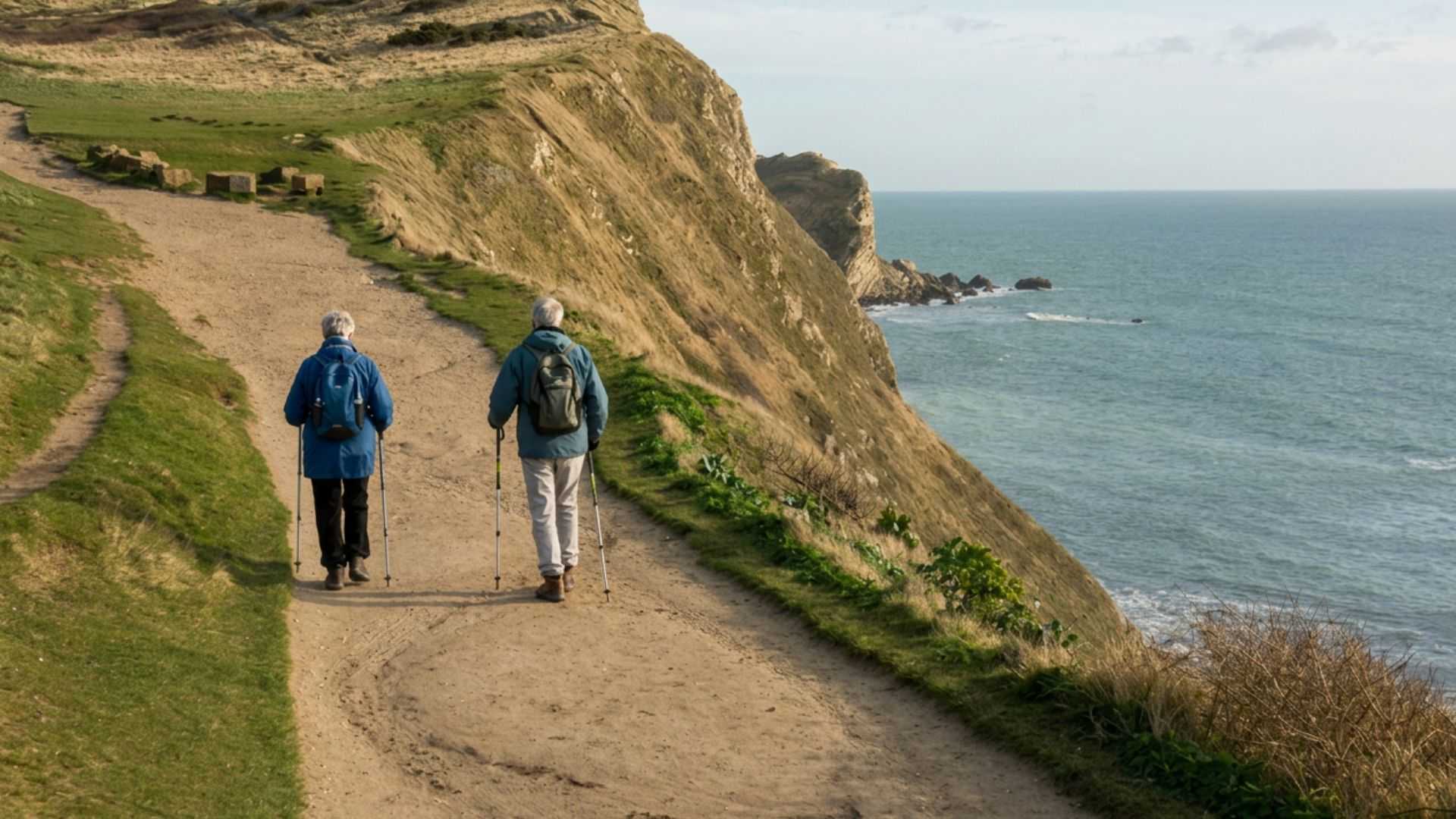
“Could I actually do this?” is usually the first question, long before anyone looks at a map.
It is a fair one. You do not need exceptional fitness for most walking holidays. What matters is choosing a route that matches your current distance, terrain and pace, not where you wish you were.
That distinction matters. A gentle riverside trail, a rolling countryside route and a hilly coast path all ask different things of your legs, even when the distance on paper looks similar.
For many routes, no. A walking holiday is not an expedition. It is a series of days, each with a clear distance, a known end point and a bed waiting at the finish.
What matters is choosing a route and duration that suit your current fitness, not chasing a version of the trail built for someone else.
Distance is the obvious variable, but terrain changes everything. A flat, well-surfaced stretch feels very different from a shorter day with a steep climb, slippery field edges or repeated ups and downs along the coast.
The same trail can often be walked in different ways. A long-distance path might be tackled as a short break, a half-path section or the full route, so the commitment can scale with you rather than the other way round.
If this would be your first self-guided trip, our guide to walking holidays for beginners is a useful next step.
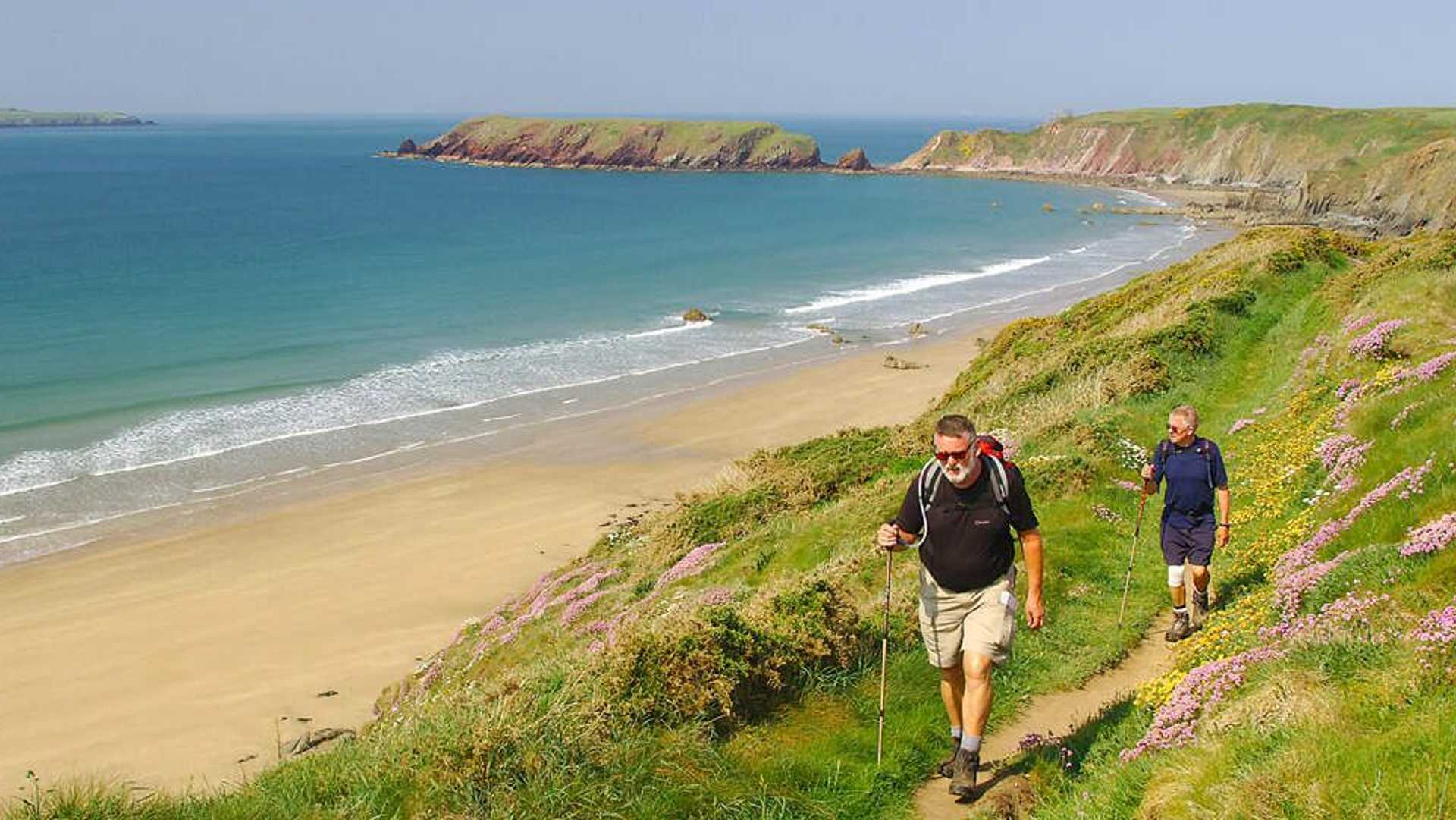
Walking holiday difficulty levels are not just about mileage. The same distance can feel gentle on firm lower-level paths and demanding on wet clifftop ground that rises and falls all morning.
The Pembrokeshire Coast Path is a good example. No single climb is especially high, but the path keeps dropping towards coves and rising back to the cliffs. Across the full trail, that adds up to around 35,000 feet of rise and fall, often compared with the height of Everest. It is not mountain altitude, but it explains why a coastal route can feel more tiring than the map first suggests.
Broadly, hike difficulty levels come down to a handful of factors working together.
An easy walking holiday usually means shorter days, gentler terrain and more forgiving paths. There may still be lanes, stiles, muddy fields or a climb into a village, but the day should not feel relentless.
A moderate walking holiday asks more of you. So, what is a moderate hike? In practice, it is a walk where you are out for several hours, meet some hills or uneven ground, and need a steady pace rather than speed. You should expect to feel tired by the time you arrive, but still glad to be there.
A challenging walking holiday may include longer days, repeated climbs and descents, rougher surfaces, exposed sections or fewer easy stopping points. It is still walking, not a race, but it suits someone already comfortable with full days on their feet.
You may see this described as hiking difficulty levels, hike levels difficulty, walking grades or route ratings. The wording changes, but the useful question is simpler: what will this route feel like on the third or fourth morning?
Your walking fitness level is not a badge. Your hiking fitness level is simply a practical snapshot of what your body is used to doing now.
Before choosing a route, ask yourself a few honest questions.
Have you done a full morning’s walk recently, and how did you feel afterwards? Could you carry on after lunch without forcing it? Can you manage a hill slowly and recover at the top? If you walk on Saturday, do you feel ready to go again on Sunday?
Recovery is easy to overlook. A single long walk tells you something, but walking on consecutive days tells you more. Many people find the second morning more revealing than the first afternoon.
Also think about the ground you usually walk on. Pavements and park paths help build general fitness, but a walking holiday may bring wet grass, loose stone, farm tracks, steps, gates and field edges. None of these is dramatic on its own. Together, they add to the effort.
A handful of conditions can push a walk from comfortable to demanding. It is worth knowing them before you book.
Distance matters, but not in isolation. A long, level day can be easier than a shorter route with sustained climbing.
Ascent is the obvious one. A steady climb after breakfast can be enjoyable if you take it slowly. Repeated short climbs, especially on coastal paths, can be more tiring because you never quite settle into one rhythm.
Descent matters too. Many knees notice the downhill before the uphill. A long drop on stone, roots or loose ground can take concentration, particularly when the weather has been wet.
Underfoot conditions change the whole feel of a route. A grassy path in dry weather may be straightforward. The same path after rain can become slippery, and a muddy field before a stile can slow the whole day down.
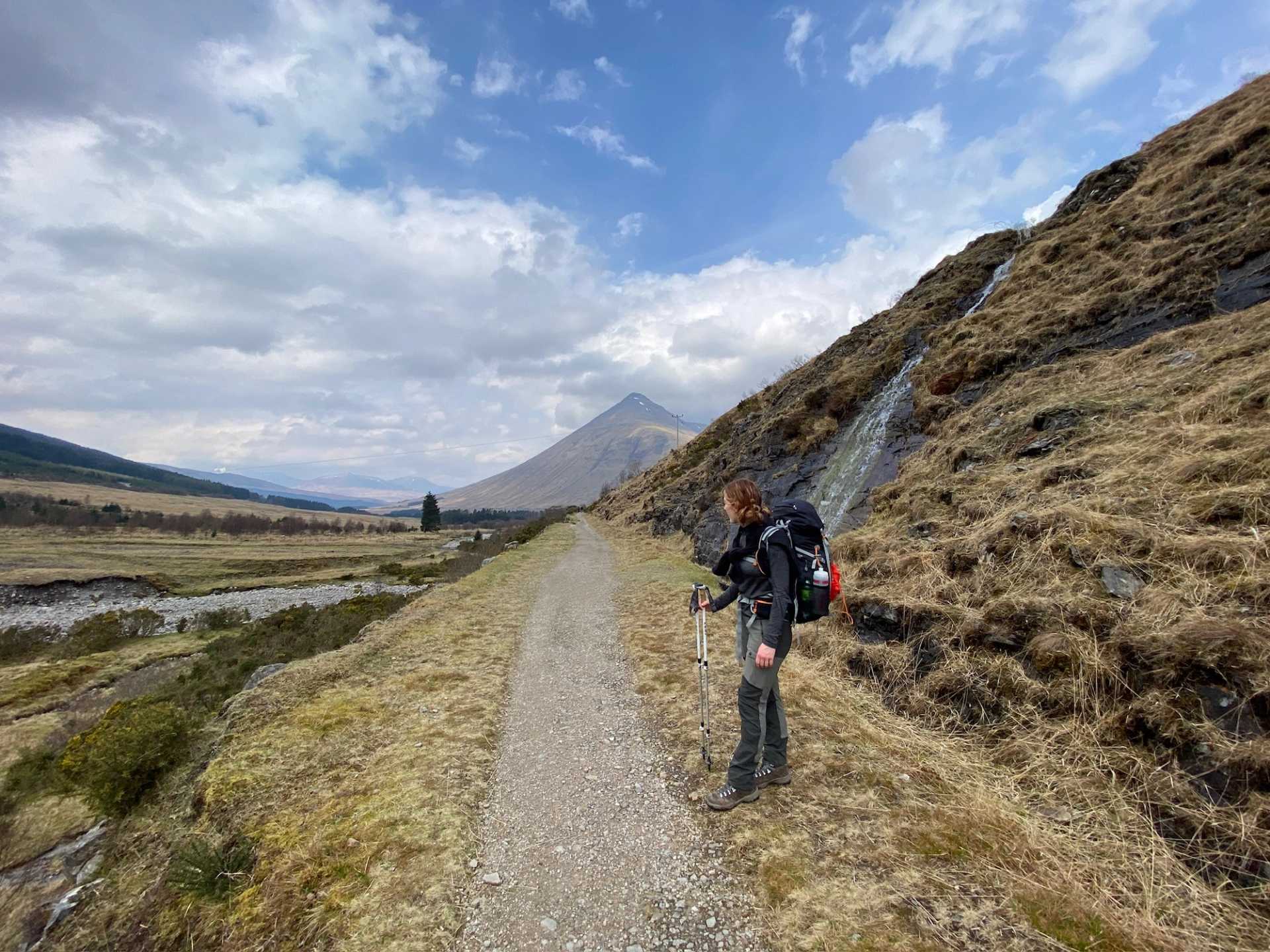
Route profiles do not always tell the whole story. Holly, a member of the Celtic Trails team who looks after several of our Scottish walks, including the West Highland Way, Great Glen Way and John Muir Way, puts it well:
“The West Highland Way is a good reminder that flat does not always mean easy. Heading out from Tyndrum, the trail can look fairly straightforward on paper, with little elevation, but the long flat stretches can be surprisingly tiring underfoot. Your feet are making the same impact again and again on hard tarmac and gravel, and your knees feel it too.
Then between Rowardennan and Inverarnan, the distances are shorter, but the tree roots, slippery rocks and broken ground ask for constant concentration. It takes energy to keep watching your feet and choosing each step.”
That is often how walking difficulty works. The challenge is not always one obvious climb. It can be hard ground underfoot, a wet stretch after rain, or the mental effort of watching every step when the path is rough.
Weather is part of the walking, especially in the British Isles. Wind on an open ridge, warm sun on an exposed path, or rain that turns stone and grass slick all add effort. They do not need to spoil the day, but they should be allowed for.
Weight changes things. On a Celtic Trails holiday, your main bag moves ahead to the next stop, so you walk the day with only what you choose to carry.
Finding your way also uses energy. Good route notes and mapping help, but you still need to look up, read the ground, notice a turning and make decisions. If you are new to self-guided walking, choose a route where the daily distance and terrain leave space for that.
The best way to get fit for hiking is to walk regularly, then make your walking a little more like the holiday you are planning.
Fitness preparation for hiking does not need to be dramatic. You are not training for a race. You are helping your feet, legs and lungs become used to steady days outside.
If you have not exercised for some time, or you have a medical condition or concern, start with proper health advice. The NHS physical activity guidance gives a useful benchmark: moderate activity is the sort where you can still talk, but not sing. That is a good test on a hill.
For packing, route planning and pre-trip checks, our guide to getting prepared for a walking trip sits alongside the fitness advice below.
Regular short walks build the specific stamina hiking needs better than one ambitious outing followed by a week of sore legs.
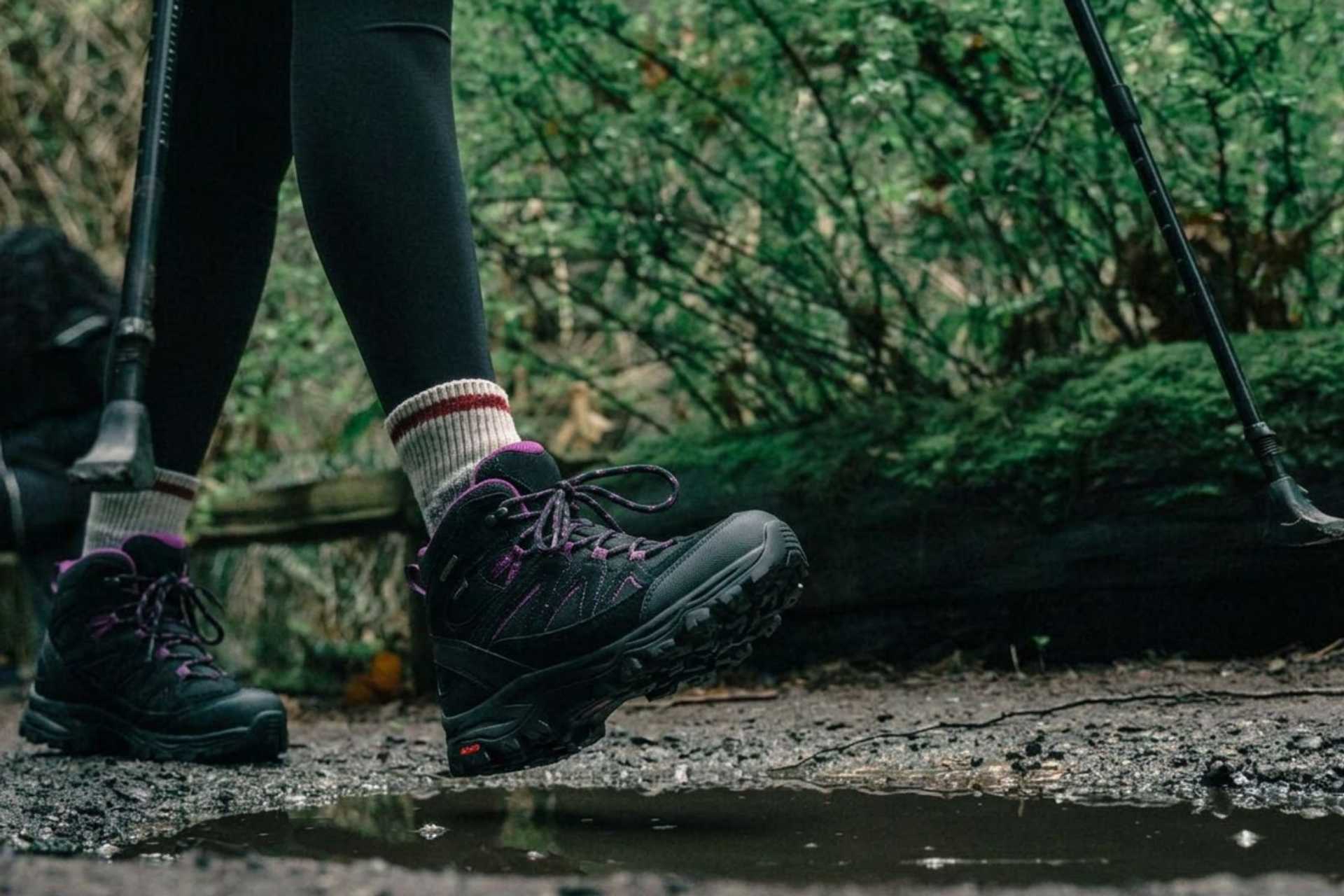
A familiar loop from home is fine. Wear the shoes or boots you expect to use on holiday, and notice small irritations early: a rubbing heel, socks that bunch, or a jacket that feels too warm once you start climbing.
The point is to make walking ordinary.
Add distance in small steps rather than jumping straight to your target mileage. A gradual build lets your legs and feet adapt without the setback of overdoing it early.
Every so often, practise a walk that feels closer to a holiday day. Take your waterproof, water, layers and the small bag you expect to carry. Stop for lunch. Start again afterwards.
That second start matters. It is one of the quiet skills of a walking holiday.
If your usual routes are flat, seek out hills deliberately, even modest ones. Hill fitness is its own skill, and it is the one first-time walkers often underestimate.
Find a local hill, set of steps, sloping lane or rougher track. Walk it slowly and steadily. Let your breathing rise, then settle. Practise stopping briefly without letting the stop become the end of the walk.
If you live somewhere flat, stairs, bridges or repeated small inclines can still help. They are not the same as a long hillside, but they teach your legs the movement.
Basic leg and core strength work supports stability on uneven ground and reduces fatigue on longer days.
It does not need to be elaborate. Step-ups, sit-to-stand movements, gentle squats, calf raises and balance work can all help.
Keep it controlled. The aim is not to turn preparation into another hobby, but to make hills, descents and uneven ground feel more manageable.
How to build stamina for hiking is mostly about repeating effort without overreaching.
Try walking on two consecutive days before you travel. The second walk does not have to be long. Its purpose is to show you how your legs feel after a night’s sleep, and how much recovery you need.
Stamina also comes from pace. On holiday, the best pace is often slower than your eager first morning suggests. Start steadily, pause before you are exhausted, and let the day unfold.
A good walking rhythm leaves room for a churchyard bench, a lane-side view, or a cup of tea before dinner.
Matching a route to where you are now, rather than where you would like to be, is the real skill in planning a walking holiday.
Celtic Trails has arranged self-guided walking holidays since 1997. We book your accommodation, move your luggage between stops, and provide a route pack, so you can walk independently at your own pace.
If fitness is the question holding you back, you do not need to guess. Tell us where and when you are thinking of walking, how far you usually walk, and what sort of terrain you enjoy. We will check what is possible and come back to you with a free, no-obligation personalised estimate before you decide.
For first trips, shorter time away, or mixed abilities in the same party, these guides may help: walking holidays for beginners, family-friendly walking holidays, hiking breaks suitable for seniors and short break walking holidays.
Choose the walk that lets you finish the day well. The bed, the meal and the next morning matter too.
Yes. Beginners can go on a walking holiday if the route, distance and terrain are chosen carefully.
Start with a shorter route or section, modest daily distances and gentler ground. You do not need to prove anything on day one.
There is no single number that works for every route.
As a guide, you should be comfortable walking for several hours at an easy, steady pace, and able to do it again the next day. Terrain matters as much as distance, so try to practise on ground that feels similar to the route you are considering.
Yes, walking holidays can suit older adults when the itinerary matches current fitness, confidence and recovery.
The important choices are daily distance, terrain, pace, rest time and accommodation location. If you have not exercised for a while, or you have a health concern, speak to a GP before building up your walking.