Walking in the Rain: Stay Comfortable on UK Walks
Loading content...
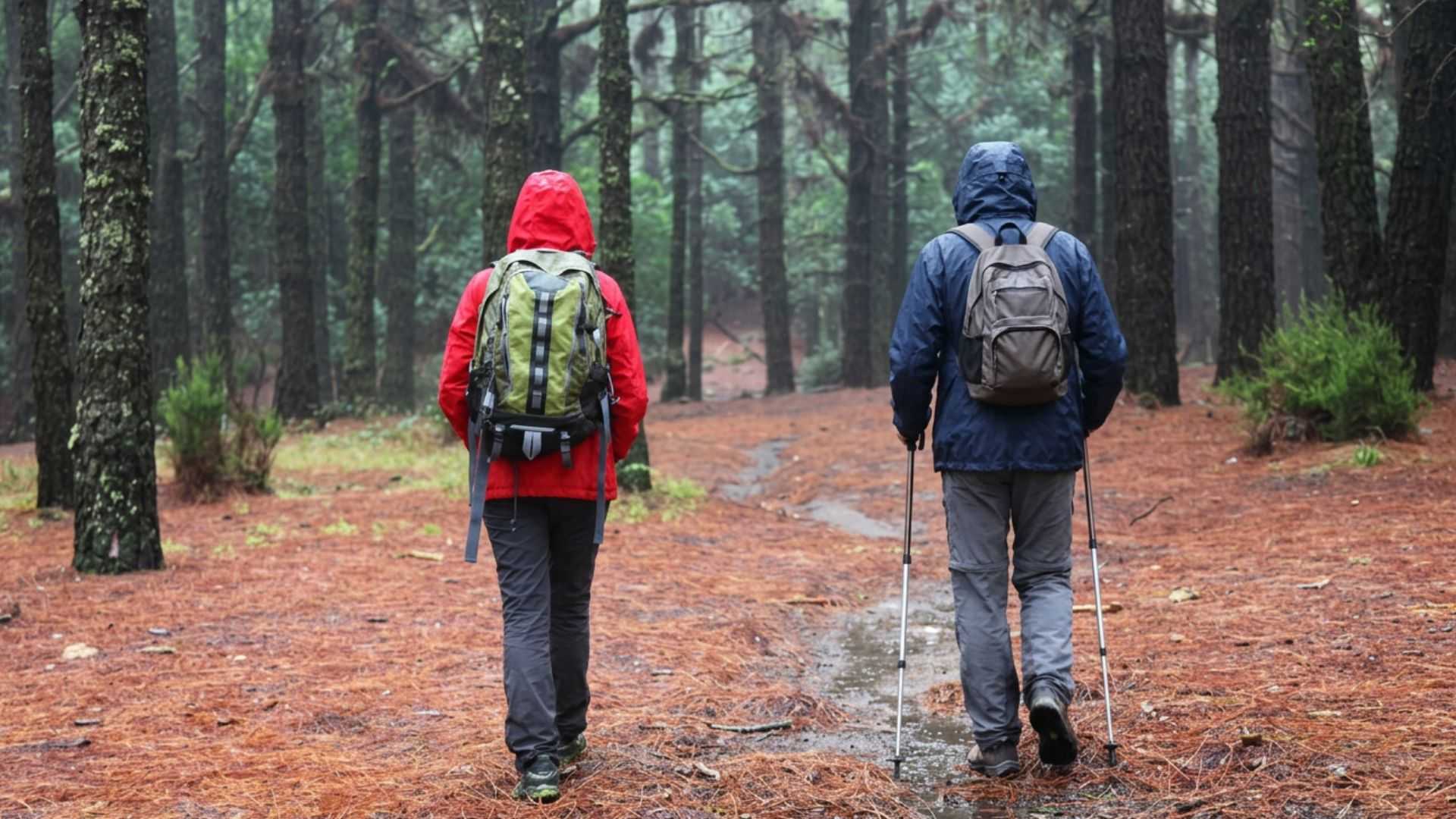
Walking in the rain is part of walking in Britain, and it can still be a good day out if you dress for movement, keep dry layers dry, and know when to change your plan.
The trick is to stay warm enough, dry enough and comfortable enough to keep enjoying the path, whether the rain passes in a soft shower or settles in for the afternoon.
Rain changes a walk, but it does not have to spoil it. A shower can clear the air, deepen the colour in stone walls and woodland, and leave the path quieter than it would be on a fair-weather day.
There is a particular kind of satisfaction in arriving dry enough, warm enough and still in good spirits. You have read the day properly and walked it on its own terms.
That said, rain is not always harmless. If the forecast includes thunder, high winds, flooding, poor visibility on exposed ground or difficult river crossings, it is sensible to shorten the day, choose a lower route or wait. There is no prize for pushing on when the weather has changed the walk into something else.
For many people, the appeal of walking is partly that it puts you back into the day as it is. That is one of the benefits of time in nature: you notice the weather, the light, the sound underfoot, and the small changes that are easy to miss indoors.
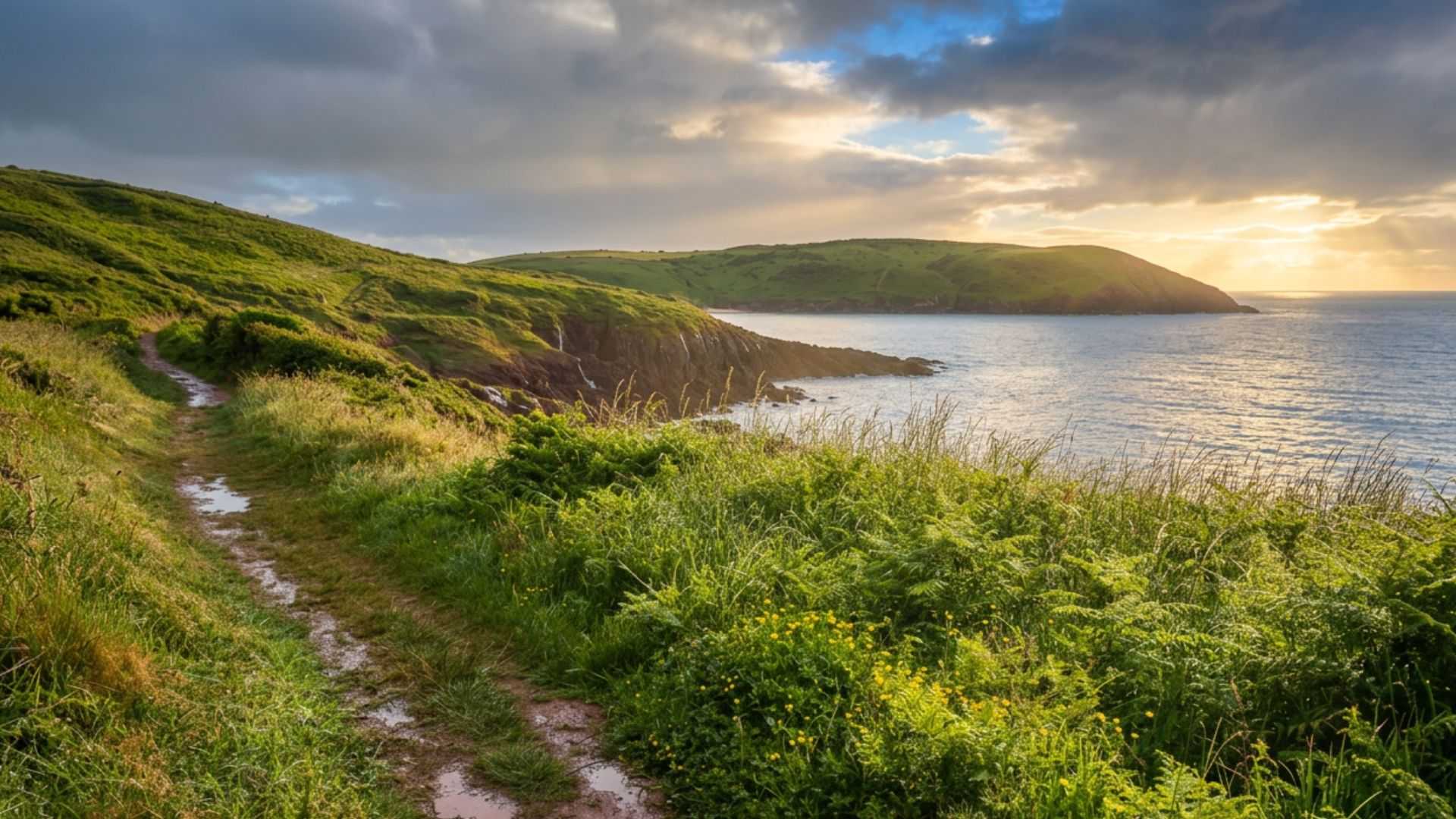
Good wet weather hiking gear keeps rain off, lets heat escape and still feels comfortable when you are moving. On a long wet day, some dampness is normal. Comfort is the better test.
The common mistake is dressing too warmly at the start. You set off dry, climb the first hill, sweat into your layers, then feel chilled as soon as you stop. In wet weather, managing moisture from inside your clothing matters almost as much as keeping rain out.
A good waterproof jacket should have a hood you can adjust, sleeves that sit properly over gloves, and enough room for a warm layer underneath without pulling across your shoulders. Pockets are useful, but only if you can reach them with your rucksack on.
Breathability matters. On a steady climb, open the front zip a little before you overheat. If your jacket has ventilation zips, use them early rather than waiting until you are already damp inside.
Waterproof trousers are worth carrying even if the morning looks only slightly wet. Wet legs can feel tolerable while you are moving, then suddenly cold when you pause. Full-length side zips make them easier to put on over boots, especially when the rain has already started.
What to wear hiking in the rain starts with your feet. Wet grass, puddled lanes, muddy field edges and slick stone can all test your footwear before the rain itself becomes a problem.
Choose walking shoes or boots with a sole that grips well on wet ground, and wear them in before your trip. Waterproof footwear helps, but it should still fit comfortably once your socks are damp and your feet have warmed up. A boot that rubs in dry weather will not become kinder in rain.
Socks matter too. Avoid cotton, which holds water against the skin. A walking sock with enough cushioning can reduce friction when your feet are damp, and a spare pair in a dry bag can make the second half of the day feel very different.
For more detailed footwear guidance, see our guide to choosing the best walking shoes and trainers.
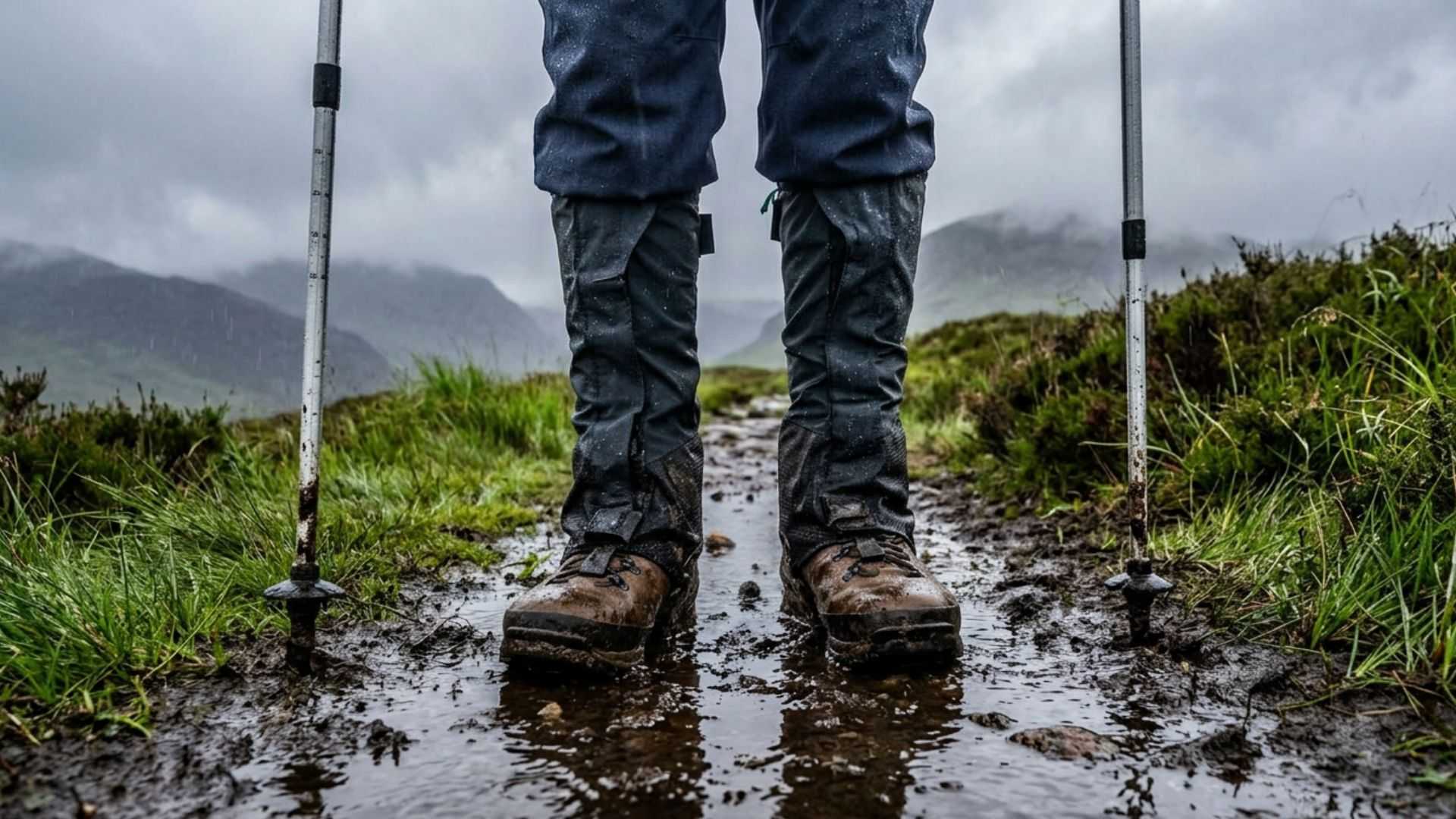
Gaiters earn their place in wet grass, muddy paths and boggy patches. They stop rain running into the tops of your boots and keep grit, seeds and mud from working their way into your socks.
They are especially useful on paths where the ground is persistently wet rather than deeply flooded. That is often the sort of weather that catches you out: not dramatic, just enough to make every step a little colder and messier.
Layering works because British weather rarely does one thing all day. You may start in drizzle, climb into wind, drop into a sheltered lane and finish with a brighter spell over the fields.
Begin with a base layer that moves moisture away from your skin. Add a warm mid-layer you can take off easily, then use your waterproof jacket and trousers as the weather demands. Cotton is best left for the evening, because once it is wet it stays wet for too long.
Your spare warm layer should stay dry until you need it. That usually means packing it inside a dry bag, rather than at the top of the rucksack where rain can find it every time you open the lid.
Small items make a disproportionate difference. A cap can keep rain off your glasses and help your hood sit better. Thin gloves can be more useful than you expect, even in mild weather, because wet hands cool quickly when you stop to check directions or open a gate.
How to hike in the rain comfortably often comes down to what you can still reach after two hours of bad weather. The best waterproof jacket is less useful if it is buried under lunch, guidebook and spare socks.
Pack your day bag in layers of use. Waterproofs should be near the top. Snacks, gloves and a hat should be easy to reach without emptying the bag onto wet ground. Anything that must stay dry, such as spare socks, a warm layer, phone, route notes or medication, should have its own protection.
A rucksack cover helps, but rain can still creep between your back and the pack. A liner or dry bags inside the rucksack give better protection for the items that matter. Using both is the more reliable combination.
Your walking holiday packing will also change because you are preparing for more than one wet afternoon at home. You need to think about drying things overnight, starting again the next morning, and keeping one set of clothes clean and dry for the evening. Our walking holiday packing checklist covers the wider kit picture.
Heavy rain can make a familiar pace feel harder. Most hiking in rain tips come back to the same simple point: slow down before you need to. Shorter steps help on slick descents, and a steadier pace stops you overheating under waterproofs.
Breaks need a little thought. A long stop in the open can chill you quickly, so look for a wall, porch, woodland edge or sheltered bend in the path. Eat something before you feel flat. Rain has a way of making people delay simple things like drinking, snacking and adjusting layers.
Keep an eye on your feet, but do not obsess over every splash. Once conditions are wet, your aim is comfort, not perfection. Change socks if it helps, tighten laces if your foot is sliding, and deal with any rubbing early.
There is also the morale side of hiking in the rain. Keep the map or route notes protected, know where the next village or accommodation is, and give yourself small markers: the next bridge, the next lane, the next sheltered place to pause. Wet days feel easier when you break them into manageable pieces.
Some routes handle rain better than others. Lower wooded routes, valley paths and well-surfaced tracks can feel very different from exposed ridges or open moorland in the same weather. If you are choosing where to walk, the UK’s areas of outstanding natural beauty include many landscapes where a damp day still gives you shelter, texture and a strong sense of place.
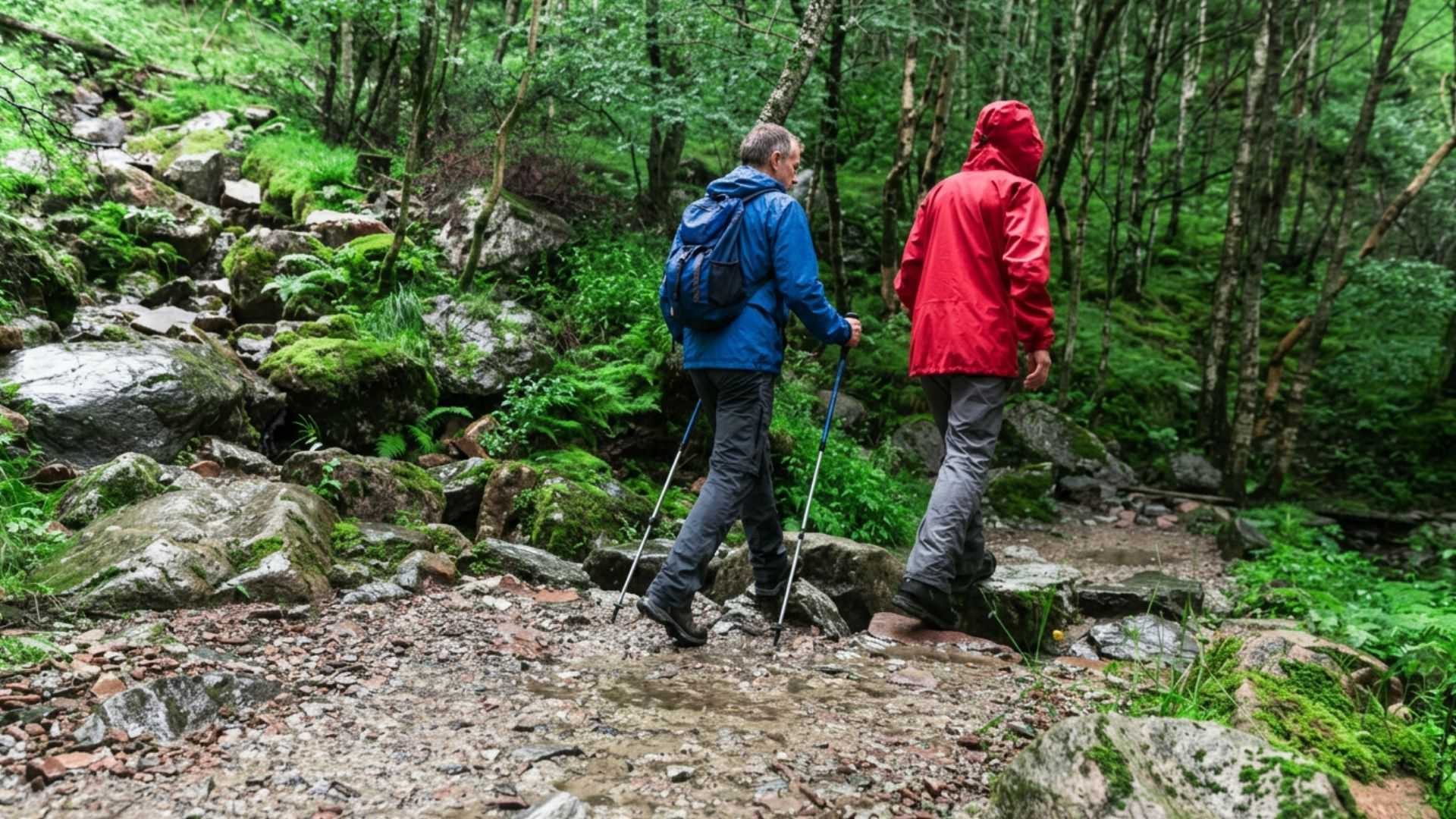
It is usually safe to hike in the rain when the route suits the weather, the forecast is reasonable and you have the right clothing for the conditions. The risk rises when rain is joined by cold wind, poor visibility, thunder, flooding, steep slippery ground or fast-moving water.
Check the forecast before you leave, then match the day to what you find. A lower path, a shorter stage or a delayed start can be the better walking decision.
Walk a little more steadily than you might in dry weather. Heavy rain can make descents slick, stiles slower and breaks colder, so give yourself more time and make small adjustments early.
Sheltered pauses help more than long stops in the open. Eat before your energy drops, drink even if you do not feel thirsty, and keep your next useful marker in mind: a bridge, a village, a lane, or the next place where you can check the route out of the rain.
Wear a moisture-wicking base layer, a warm mid-layer if needed, a breathable waterproof jacket, waterproof trousers, walking socks and footwear with reliable grip. Avoid cotton for the day’s walk.
A hat, gloves and gaiters are small additions that can make a wet day much easier. Keep a spare warm layer and socks dry in your rucksack.
Staying bone dry is unlikely in steady rain, but staying comfortable is realistic. Keep rain out as far as you can, reduce sweat inside your layers, and protect one dry warm layer for stops or the end of the walk.
Open vents before you overheat, close them before you chill, and change layers while you still feel comfortable. Small adjustments made early are easier than trying to recover once you are cold.
Rain can be part of the walk, not the whole of it. With the right kit and a sensible reading of the forecast, it becomes another texture of the day: the shine on stone, the smell of wet bracken, the relief of a warm room at the end.
Celtic Trails has arranged self-guided walking holidays since 1997. We plan the route, book your accommodation, and move your main bag between stops, so your wet-weather planning can focus on the day’s walk rather than the whole journey.
If you are thinking about walking in the wetter months, our autumn walking holidays are a good place to start. Tell us where and when you are thinking of walking, and we will check what is possible before you decide. You get a personalised estimate first, with no commitment.